

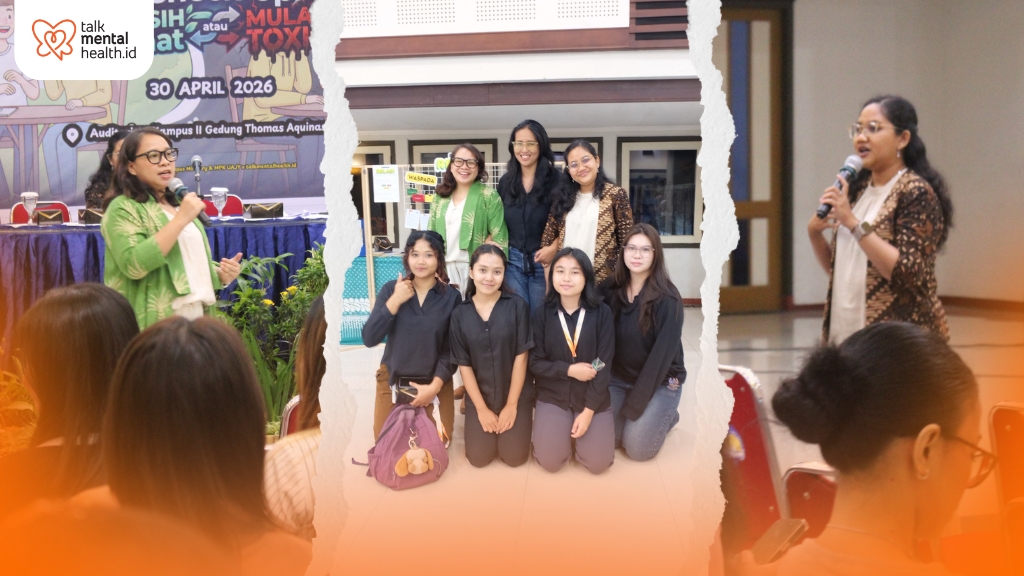
Relationship Check-Up is important because relationships are a big part of our mental health, especially during university years. This is often the phase where many people begin forming long-term patterns in communication, boundaries, conflict, and trust.
At the same time, university life can also be emotionally complex. Many young adults are navigating academic pressure, identity development, family expectations, romantic relationships, friendships, spiritual questions, and uncertainty about the future all at once. In the middle of that, relationships can become both a source of support and a source of emotional exhaustion.
Through the Relationship Check-Up: Still Healthy or Becoming Toxic? workshop, Talk Mental Health Indonesia (TMH.id) and Campus Ministry Universitas Atma Jaya Yogyakarta created a reflective space for students, staff, and lecturers to pause and explore what healthy relationships can actually look and feel like beyond social media narratives, romanticized ideas, or survival patterns we may have normalized for years.
Why This Conversation Matters
Many people can sense when something feels “off” in a relationship, but they may not always have the words to name it.
Sometimes we quietly wonder:
- Is this normal?
- Am I overreacting?
- Why do I feel emotionally tired after certain interactions?
- Is this something I need to pay attention to?
- Or have I simply become used to unhealthy patterns?
The idea of a relationship check-up has increasingly been used in relationship and counseling spaces as a preventive form of care — not only when relationships are already falling apart, but also as a way to maintain emotional connection, communication, and awareness earlier on. As discussed in “The Value of a Relationship Check-Up” by TAP Clinic, relationship check-ins can help people notice unhealthy patterns, improve communication, and strengthen relational wellbeing before issues become more deeply rooted.
The idea behind this approach is simple but important:
healthy relationships also need reflection, maintenance, and care not only emergency intervention after years of distress.
In many collectivist cultures, including Indonesia, conversations about boundaries, emotional needs, conflict, or relational safety are often minimized or misunderstood. People are sometimes taught to stay silent, avoid confrontation, tolerate discomfort, or prioritize harmony over honesty.
As a result, many young people grow up learning how to maintain relationships but not always how to recognize whether those relationships are emotionally healthy.
That is why this workshop focused not on labeling relationships as “good” or “bad,” but on helping participants notice patterns, emotional safety, communication habits, and areas that may need more attention earlier on.
This workshop was created to offer a space for reflection without judgment. A space where participants could slow down, notice patterns, and look more clearly at one important relationship in their lives whether romantic, friendship, family, or campus-related.
Relationship Check-Up Is Not a Diagnosis
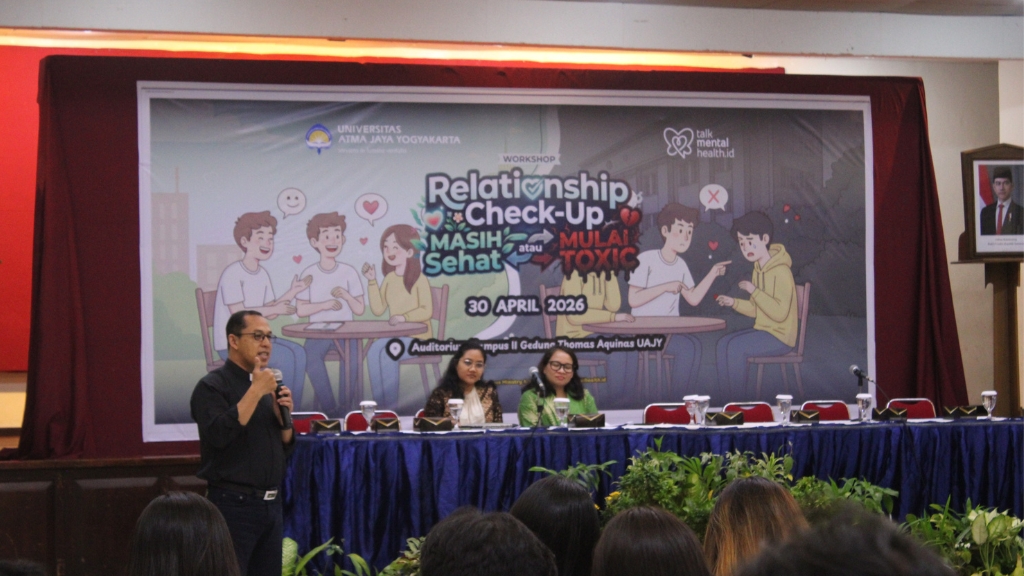
The self-assessment used in this session was not designed to judge, label, or diagnose anyone.
It was used as a mirror.
Just like a physical health check-up helps us understand our body’s condition, a relationship check-up can help us understand the emotional condition of a relationship we care about.
This is also aligned with the idea of a relationship check-up in relationship research and practice: not only responding when a relationship is already in crisis, but creating space to pause, notice patterns, strengthen awareness, and reflect on what may need care earlier.
In this session, the check-up became a gentle invitation to ask:
- Am I feeling safe in this relationship?
- Do I feel heard and respected?
- Can we repair after conflict?
- Do I feel emotionally drained more often than supported?
- Do I still have space to be myself?
The goal was not to immediately decide whether a relationship should stay or end.
The goal was awareness.
Because sometimes healing begins not from having all the answers, but from finally allowing ourselves to acknowledge what we have been feeling for a long time.
There were no wrong answers.
No shameful scores.
Only an invitation to look closer with honesty, care, and self-compassion.
Looking at Relationships Through Psychology
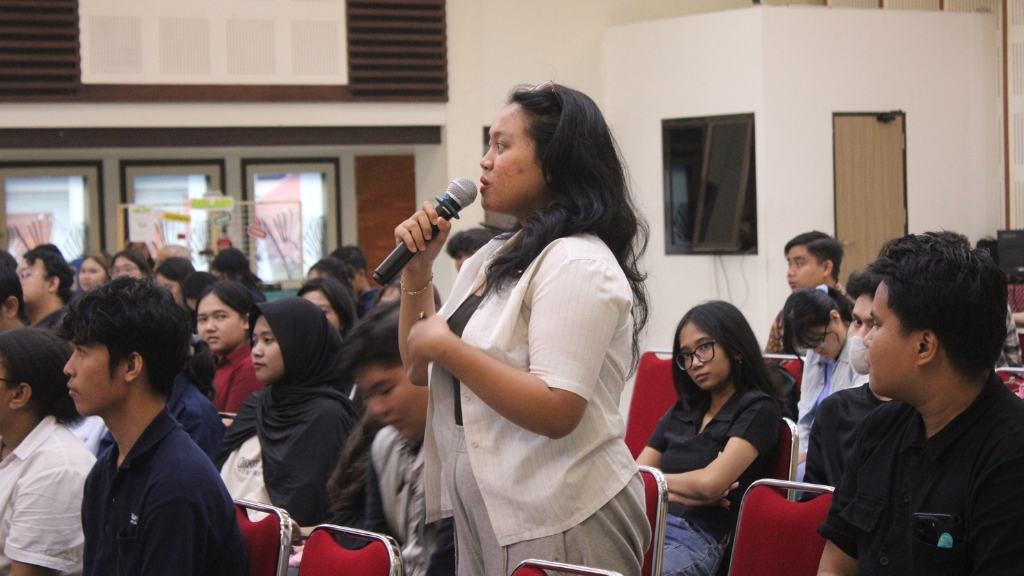
During the session, participants were introduced to several psychological perspectives to help them understand relationships in a deeper and more contextual way.
Attachment Theory
Attachment Theory helped participants reflect on how early experiences may shape the way they connect, fear rejection, avoid vulnerability, seek reassurance, or respond to emotional closeness.
For many people, relationship patterns are not random. Sometimes they are connected to what safety, affection, or inconsistency looked like growing up.
The session encouraged participants not to use attachment styles as labels, but as starting points for self-understanding.
Social Exchange Theory
Social Exchange Theory invited participants to notice whether a relationship feels fair, mutual, and emotionally sustainable.
Many participants reflected on questions such as:
- Am I constantly giving without feeling supported?
- Do I feel emotionally safe to express my needs?
- Do I stay because of love, fear, guilt, or familiarity?
These reflections opened conversations about emotional reciprocity, self-worth, and relational balance.
Triangular Theory of Love
Participants were also introduced to Sternberg’s Triangular Theory of Love, which describes intimacy, passion, and commitment as three important components of meaningful relationships.
The discussion explored how some relationships may have closeness but no safety, commitment but no emotional connection, or passion without mutual growth.
Again, the purpose was not to label relationships as “successful” or “failed,” but to help participants reflect more intentionally about what they truly need and value in connection with others.
Relationships Are Not Always Black and White
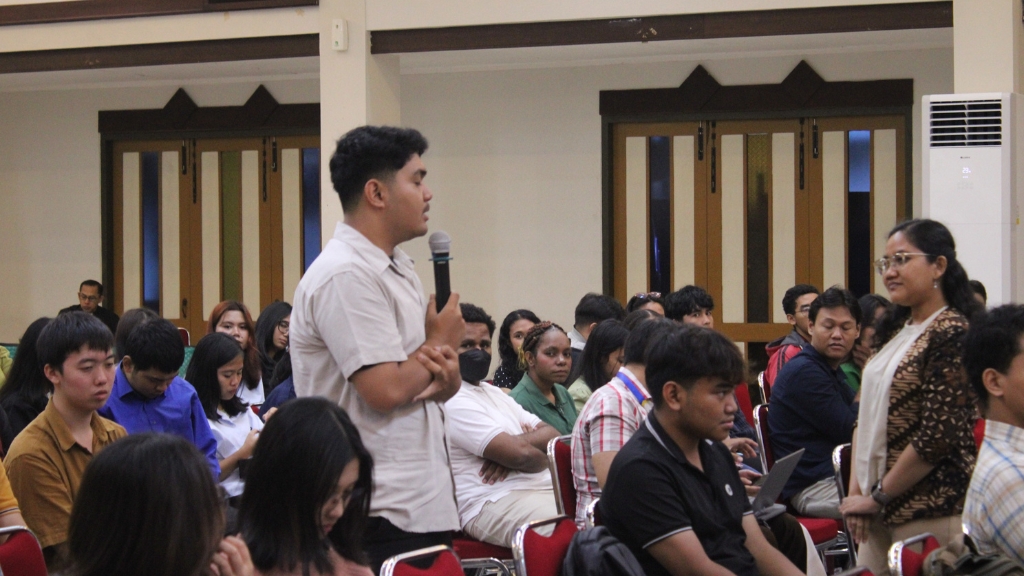
One important reflection from the workshop was that unhealthy relationships do not always appear suddenly or dramatically.
Sometimes they grow slowly through repeated patterns:
- small dismissals,
- emotional invalidation,
- control disguised as care,
- conflict without repair,
- guilt-based communication,
- or emotional needs that are consistently ignored.
That is why we explored relationships as a spectrum rather than a simple “healthy vs toxic” binary.
🔴 Needs immediate attention
🟡 Warning zone
🟢 Healthy foundation to keep nurturing
Participants reflected on seven relationship dimensions:
- communication,
- freedom and control,
- trust,
- boundaries,
- conflict response,
- emotional support,
- and mutual growth.
One important reminder throughout the workshop was this:
A healthy relationship is not a relationship without conflict.
It is a relationship that knows how to repair, communicate, take accountability, and create safety again after rupture.
A Space for Honest Reflection
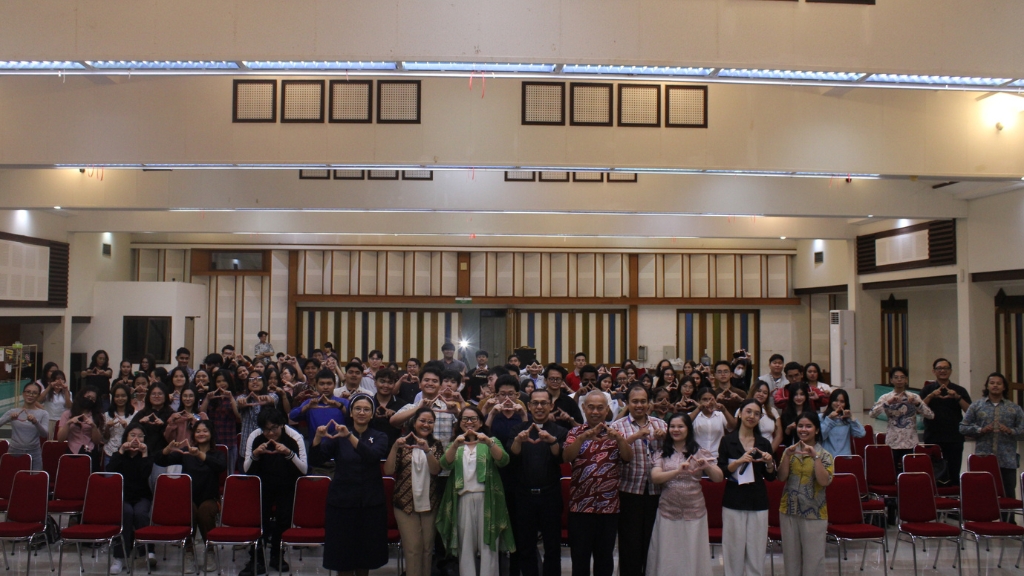
Together with more than 100 participants from Universitas Atma Jaya Yogyakarta, we spent three hours exploring relationships from personal, psychological, spiritual, and social perspectives.
We talked about:
- healthy relationship patterns,
- self-assessment and reflection,
- sources of love and meaning,
- generation gaps,
- collectivist culture,
- emotional safety,
- and the social values that shape how we relate to one another.
There were moments of discussion, silence, laughter, discomfort, and reflection.
Because conversations about relationships are rarely only theoretical.
They are deeply personal.
This workshop was not only a seminar.
It became a space where people were allowed to look inward more honestly — perhaps for the first time in a while.
a Special Thanks to
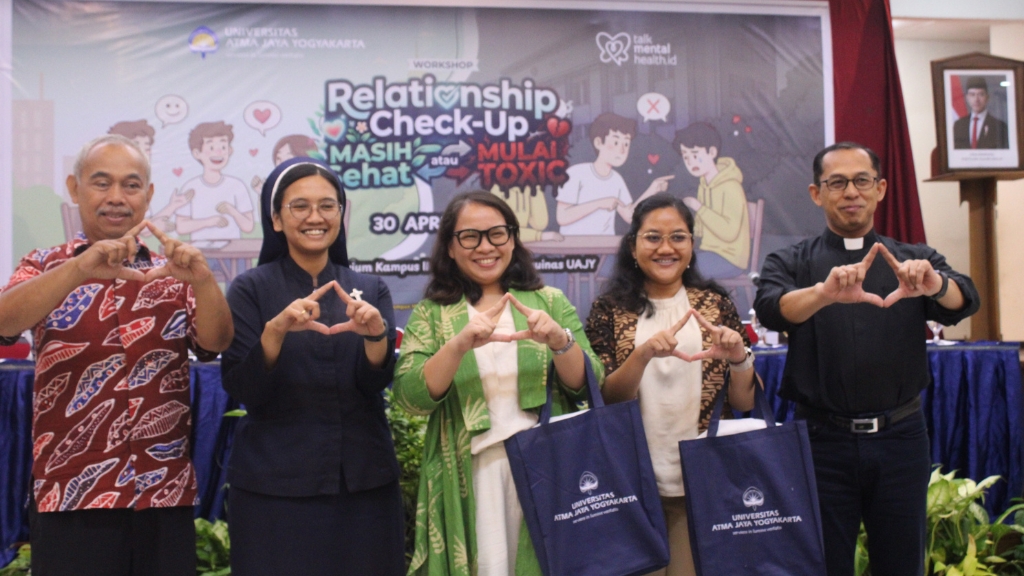
Our heartfelt thank you to Campus Ministry Universitas Atma Jaya Yogyakarta for trusting us to open this important conversation in an academic space.
Thank you to the Sahabat Jiwa Kampus volunteers for holding the space with care, presence, and sincerity.
And thank you to all participants students, staff, and lecturers — who chose to be present, not only physically, but also with honesty and courage.
More than 100 people sat together and reflected on something deeply personal.
That was meaningful.
Reflection
A good relationship is not one that constantly makes you shrink, fear, or lose yourself.
A good relationship is one that strengthens, respects, and humanizes you.
And often, building healthier relationships with others begins with learning how to reconnect with ourselves first: our boundaries, emotions, needs, values, and sense of worth.
Whatever you are feeling about the relationships in your life right now, you do not have to navigate it alone.
TMH.id is here as a safe space to share, learn, reflect, and grow together.
You can also join GROW Support Group, a community-based space to process emotions, grief, relationships, and self-growth with more support.
Because everyone deserves relationships that help them feel more whole, not less.