

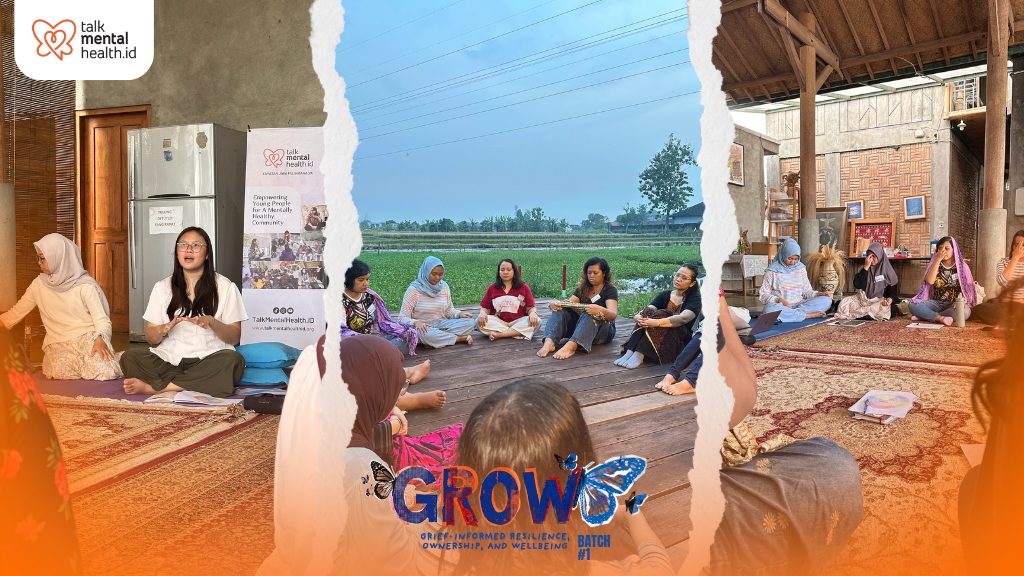
In GROW Session 2, we explored the theme of releasing emotions without shame—an experience that may sound simple, but can feel confusing, awkward, or even heavy in practice.
At first, “emotional release” may sound like something that should feel relieving, freeing, or natural. But in reality, many of us do not experience it that way at least not immediately.
Sometimes, when we begin to express or release what we feel, it can feel confusing, uncomfortable, awkward, or even heavy.
And that makes sense.
For many of us, emotions were not something we were taught to understand. We were often taught to manage them, hide them, soften them, or move on from them quickly. Because of that, the process of actually sitting with emotions can feel unfamiliar.
We Were Not Always Taught How to Be With Emotions
Many of us grew up without enough space to learn how to:
- recognize what we feel
- name our emotions honestly
- express them without fear
- release them safely
- and know when we need support
Often, emotions were only allowed when they were “acceptable” or easy for others to receive.
Anger, sadness, disappointment, fear, or grief may have been seen as too much, too dramatic, or inconvenient.
So when we finally enter a space that says, “your emotions are allowed here,” it can feel strange at first.
Not because the space is wrong,
but because permission itself may feel unfamiliar.
Research also helps us understand why this happens.
A study titled “Emotion Suppression and Its Impact on Stress and Well-Being” highlights that when emotions are consistently suppressed, the body and nervous system can remain in a prolonged stress response, rather than actually processing and resolving what is felt.
Over time, this doesn’t just affect how we feel internally, it also shapes how we relate to emotions as a whole.
Other research, such as “Emotion Regulation: Conceptual and Clinical Issues”, explains that emotional skills are not something we are simply born with, but something we learn through our environment—especially through early relationships. When these skills are not modeled or supported, it becomes harder to recognize and regulate emotions later in life.
This means that the awkwardness we feel today is not a personal failure.
It is often a reflection of what was missing.
So when we begin to sit with emotions to feel them, name them, or express them
we are not just “processing.”
We are learning a language that many of us were never taught.
Releasing Emotions Does Not Have to Be Dramatic
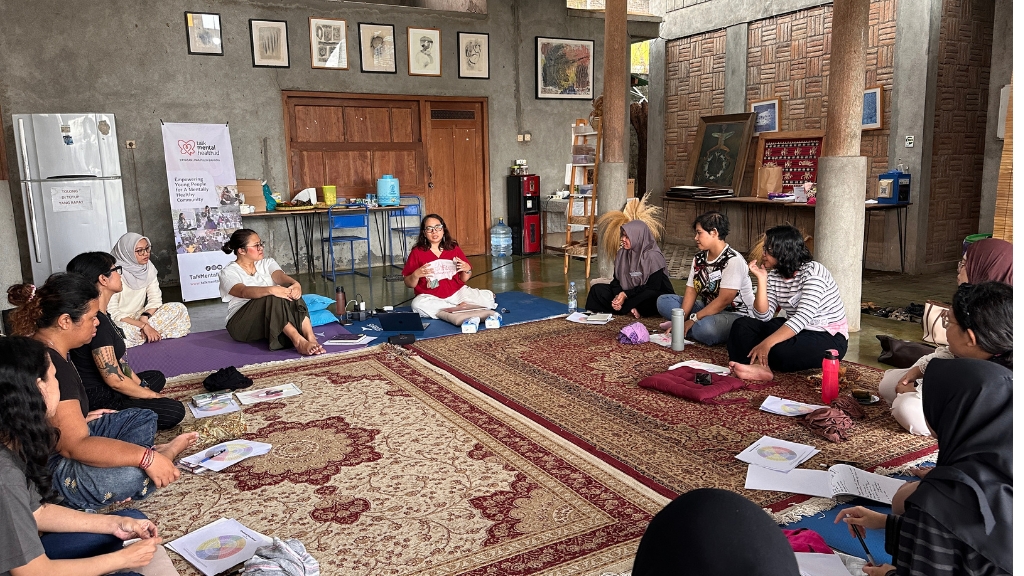
Together with Clessya, the psychologist who facilitated this session, participants were invited to gently unpack old beliefs around emotions.
One important reflection was that emotional release does not always have to look intense.
It does not always have to mean crying loudly, telling the whole story, or expressing everything at once.
Sometimes, release can look like:
- taking a deeper breath
- noticing tension in the body
- writing one honest sentence
- allowing tears to come quietly
- saying, “I don’t know what I feel yet”
- or simply admitting, “this is hard”
These small moments matter too.
Because healing does not always happen through big breakthroughs.
Sometimes it begins through small permissions.
Before Release, We Need a Safe Container
One thing we often forget is that before releasing emotions, we need to build enough safety.
We may want to quickly let go of what hurts, but our body and nervous system may need more time.
That is why we can ask ourselves:
Do I feel safe enough to feel this?
Can I hold what is coming up?
Do I need someone to sit with me?
Do I need to pause first?
Without a safe container, emotional release can feel overwhelming. It can feel like opening something too quickly before we are ready.
In GROW, we are learning that release is not about forcing emotions out. It is about creating enough safety so emotions can move at a pace our body can tolerate.
The Body Also Holds What We Feel
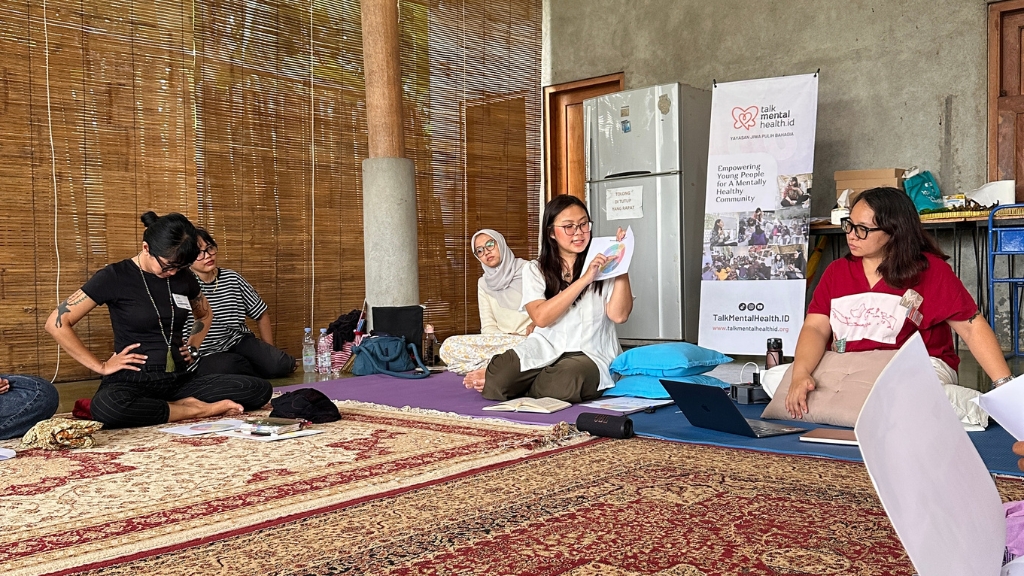
Another important part of the session was remembering that emotions do not only live in the mind.
Often, we try to understand our emotions by thinking more, analyzing more, or explaining more. But the body also carries stories.
Emotions may show up as:
- shallow breathing
- tight shoulders
- a heavy chest
- a tense jaw
- stomach discomfort
- tiredness
- numbness
- restlessness
This is why emotional release is not only about talking. It is also about listening to the body.
Sometimes, the body knows that something is heavy before we can explain it in words.
Why This Matters for Many Indonesian Women
This conversation is especially important for many Indonesian women, because many of us grow up hearing messages like:
“Don’t be too emotional.”
“Be patient.”
“Don’t be angry.”
“Don’t make others uncomfortable.”
“Be strong.”
“Just give in.”
These messages may sound normal, even caring, but over time they can teach us to disconnect from what we feel.
We may become very good at functioning, smiling, helping others, or holding everything together while slowly losing connection with our own emotional needs.
So when we begin to release emotions, it may feel awkward because we are practicing something new.
We are not only releasing emotions.
We are also unlearning shame.
What We Are Learning in GROW
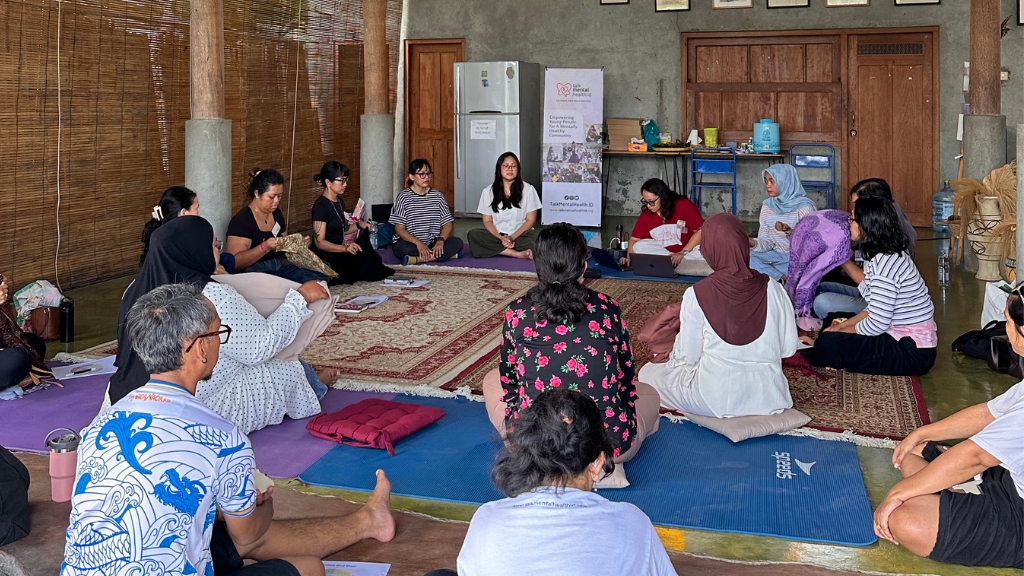
In GROW, participants are not expected to be immediately comfortable with emotions.
Instead, we are learning that:
awkwardness is part of the process.
emotions are allowed to exist.
the body deserves to be included.
release needs safety.
and we do not always have to process everything alone.
Session 2 became a gentle reminder that emotional release is not about rushing to feel better.
It is about learning to be present with what is here, building enough capacity to hold it, and slowly allowing it to move.
Closing Reflection
Releasing emotions can feel awkward because many of us were never taught how to do it safely.
But awkward does not mean wrong.
Sometimes, awkward is the beginning of a new relationship with ourselves.
A relationship where we no longer need to shame our emotions, silence our body, or carry everything alone.
GROW is a space to practice that slowly, safely, and together.
A Space to Learn, Slowly and Safely
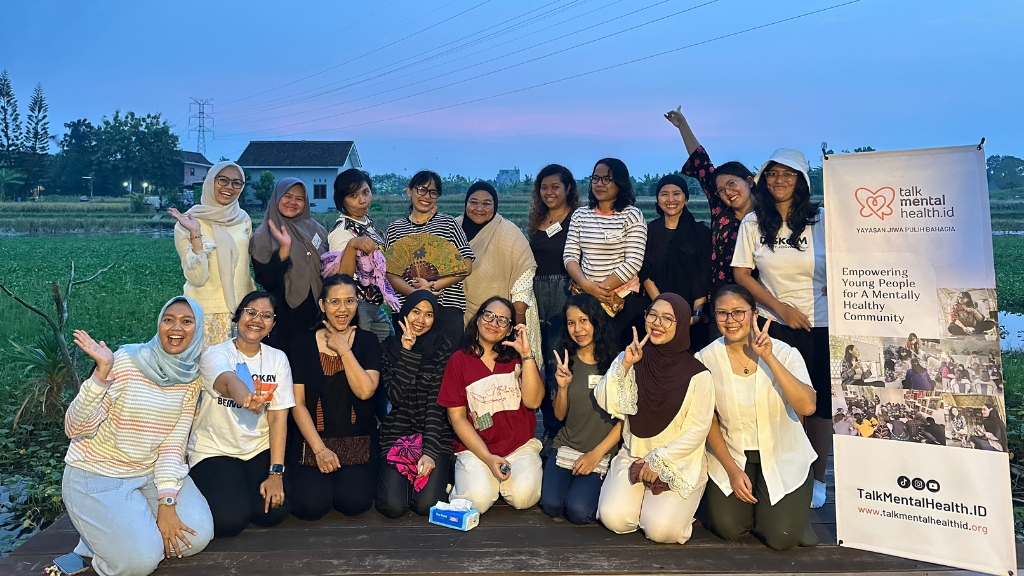
If this reflection resonates with you
if sitting with emotions feels awkward, confusing, or “too much”
you are not alone.
GROW was created as a space to arrive slowly, not to force yourself to open up before you are ready.
A space where awkwardness is welcome, emotions don’t have to be performed, the body is included, and you don’t have to hold everything by yourself.
GROW is a support group programme by Talk Mental Health Indonesia that offers community-based reflection and healing through grief-informed practice, emotional awareness, body-based approaches, creative expression, and meaningful connection.
If you are carrying something unspoken, learning to understand your emotions, or longing for a gentler space to reconnect with yourself, you are welcome here.
Follow Talk Mental Health Indonesia’s Instagram (@talkmentalhealth.id) for upcoming programmes, future GROW batches, and community wellbeing initiatives.
If this feels like a space you may need, you can learn more through our Instagram and website. Detailed information about the program is available on Instagram and on the TMH.id support group page.
If you feel ready to join, you can register here: Open Call GROW Session
Sometimes, the process begins with awkwardness.
And sometimes, a safe space is where everything starts to shift.