

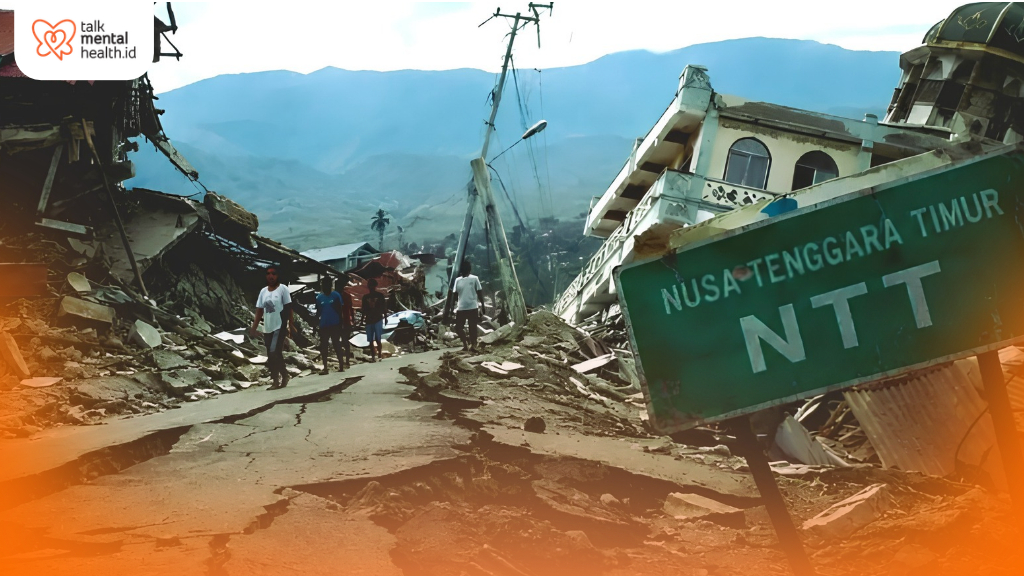
The NTT Earthquake on August 15, 2026, did not only leave behind damaged buildings and infrastructure. Behind the number of casualties and displaced people are individuals and families facing different forms of loss some visible, and others that may never appear in official reports.
The NTT Earthquake caused significant damage across affected communities. According to reports, 53 people lost their lives and 135 people were injured. More than 5,000 people were also forced to evacuate, while homes, schools, healthcare facilities, and other public infrastructure were damaged.
These numbers help us understand the scale of the disaster, but they cannot tell the whole story. Behind every number is someone who may have lost a family member, a home, a job, a familiar environment, or the sense of safety they once had. For many people affected by the NTT Earthquake, the disaster does not end when the ground stops shaking.
A disaster may happen within minutes, but the loss it leaves behind can be felt for much longer.
One Disaster, Many Forms of Loss
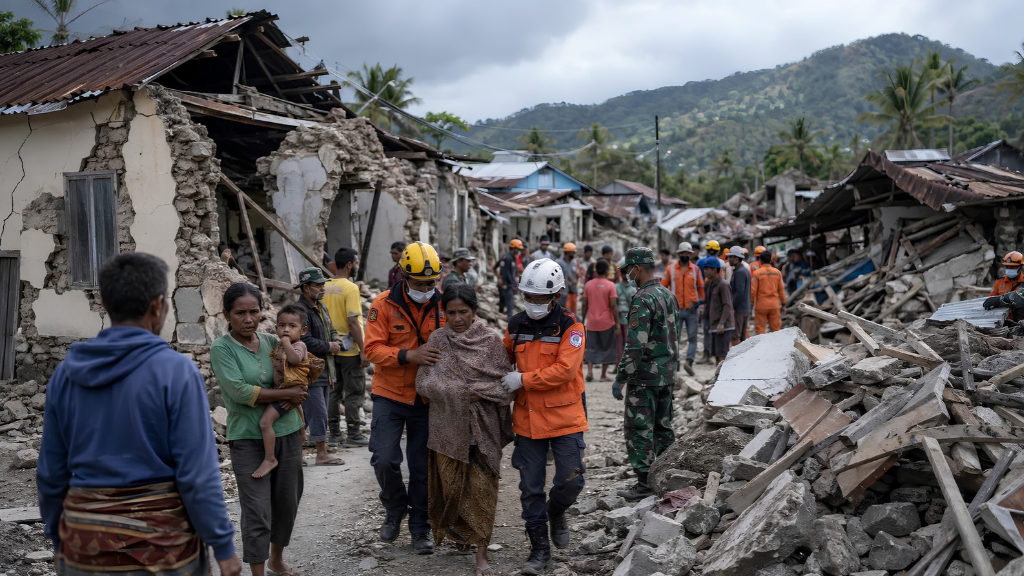
When we hear the word grief, we may immediately think about losing someone we love. Yet after a disaster such as the NTT Earthquake, grief can also come from losing a home, daily routines, livelihoods, communities, a sense of safety, or even the future we once imagined.
Research on disaster-related grief, “Grief and Loss Following Disasters” (2025), highlights that loss after a disaster can extend beyond death and physical damage. People may experience multiple losses at once, including the disruption of their daily lives, relationships, sense of belonging, and expectations for the future.
This is especially relevant to communities affected by the NTT Earthquake. Beyond the reported casualties and damaged buildings, survivors may also be navigating the loss of familiar places, routines, stability, and a sense of safety. These experiences may not appear in official numbers, but they can still have a significant emotional impact.
Not every loss is visible, but every loss can carry grief.
Understanding these different forms of loss reminds us that recovery is not only about rebuilding what was physically damaged. It is also about helping people gradually rebuild a sense of safety, connection, stability, and hope while giving them space to grieve what has changed.
“I Still Have to Survive.”
After the NTT Earthquake, many people may not immediately have the space to grieve. Families may still be searching for loved ones, looking for somewhere safe to stay, making sure their children have food and protection, or trying to save whatever belongings remain.
In situations like these, survival often comes first. Feelings and grief may have to be put aside temporarily because there are simply too many urgent things that need to be done. Someone may appear calm, stay busy helping others, or show very little emotion.
But not crying or not talking about a loss does not mean that someone is not grieving. Everyone responds to crisis and loss differently, and sometimes the emotional impact only becomes clearer once the immediate danger has passed.
Grief Can Come Later

When things begin to settle after the NTT Earthquake, a person may finally have the space to process what has happened. Once immediate needs are addressed and life becomes somewhat more stable, feelings of loss that were previously pushed aside may begin to surface.
Sadness is not the only emotion that may appear. Someone may feel angry, afraid, confused, empty, guilty, emotionally numb, or unable to fully understand what has happened. These responses can all be part of someone’s experience after a life-changing event.
This is why we cannot determine when someone “should” begin grieving or when they “should” be finished with their grief. Everyone’s experience is different, and there is no single timeline or correct way to grieve.
There Is No Deadline for Grief
After a disaster like the NTT Earthquake, we may hope that everything can quickly return to normal. We want homes to be rebuilt, schools to reopen, daily activities to resume, and life to feel the way it did before. But recovery does not always mean returning to exactly how things were.
Someone may have a new place to live but still grieve the home that once held their memories. A child may return to school but continue to feel afraid when they hear certain sounds. A family may resume their daily routines while still carrying the pain of losing someone they love.
Recovery, therefore, needs to be understood as a process. Sometimes, healing means learning how to live with what has changed, rebuilding a sense of safety, developing new routines, and gradually finding ways to carry the experience of loss into the life that comes next.
So, What Can We Do?
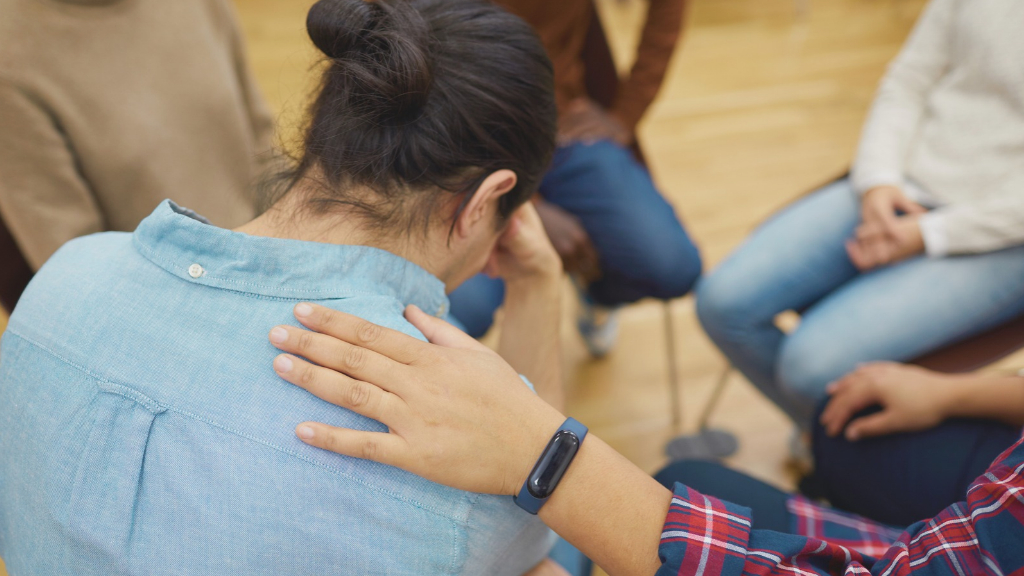
We cannot always take away someone’s grief, and we certainly cannot undo everything that has happened. But we can choose to be present and offer support in ways that respect what people affected by the NTT Earthquake are going through.
One way is to listen without immediately trying to give advice or fix things. Not every story needs a solution. Sometimes, people simply need a safe space to talk about what happened and someone who is willing to listen without judging or trying to make their feelings disappear.
We can also respect the way each person grieves. Some people want to talk, some need time alone, and others may not yet be ready to speak about what they have experienced. Giving someone space means not forcing them into a particular response or deciding when they should appear strong.
Support can also take very practical forms. Helping with daily needs, connecting someone with available services, accompanying them when seeking help, or simply checking in can make a difference. In a crisis, emotional support and practical support often go hand in hand.
Most importantly, we do not need to pressure someone to “be strong” too quickly. Phrases such as “You have to accept it,” “Don’t be sad,” or “You need to move on” may be intended to comfort, but they can unintentionally make someone feel as though their grief is taking too long.
Sometimes, a simple sentence can communicate something much more meaningful: “I’m here with you.”
Grief Also Needs Space
The NTT Earthquake has left wounds that are not always visible. Recovery, therefore, is not only about rebuilding homes, schools, roads, and public facilities. It is also about helping people rebuild a sense of safety, connection, and hope.
For someone experiencing loss, having a space to recognize and express what they are feeling can become part of the healing process. That space does not always have to be formal therapy. Family, friends, peer support groups, communities, and safe environments can also help someone feel heard and understood.
We need to see survivors not only as victims of a disaster, but as human beings navigating complex experiences of loss. Behind every casualty number is a life that has changed; behind every damaged home are memories; and behind every displaced person is someone trying to understand how to move forward after losing something important.
Creating Space for Grief
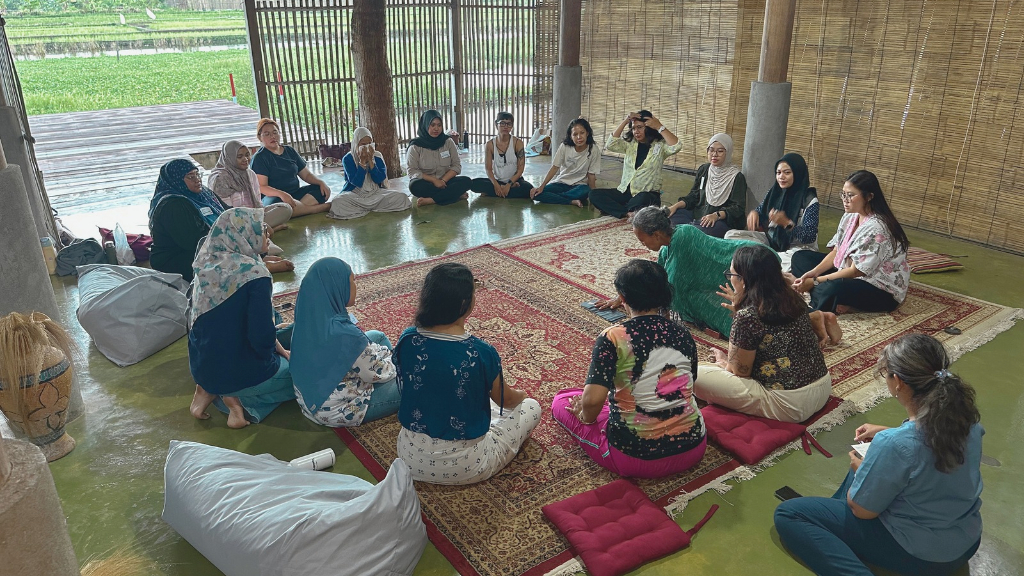
In the midst of the NTT Earthquake, people need more than physical recovery, they also need space to pause, feel, and be heard. This can be especially important for young people, who may not always have the words to describe what they are experiencing or may not yet have found an environment where they feel safe enough to talk about their grief and loss.
Through GROW Batch 2, Talk Mental Health Indonesia (TMH.id) will once again create spaces for young people to recognize and express their experiences of loss, including forms of loss that often go unseen after the NTT Earthquake. These spaces are part of an effort to remind young people that grief does not have to be carried alone.
There is space to tell your story, space to be heard, and space to better understand your own journey. Because everyone’s experience of grief is different, we also need spaces that allow people to move through their journey at their own pace.
Stay tuned for updates on GROW Batch 2 from TMH.id.
We Can Be Part of the Recovery
For those affected by the NTT Earthquake, recovery does not stop when the shaking stops. Homes need to be rebuilt, basic needs need to be met, families are grieving, and a sense of safety may need to be slowly rediscovered.
If you have the capacity to help, consider supporting trusted organizations and humanitarian efforts responding to the earthquake. Here are three donation links you can consider:
- Save the Children Indonesia: https://support.savethechildren.or.id/donasi-gempa-ntt
- Kitabisa: https://kitabisa.com/campaign/bergerakbersamantt
- Rumah Zakat: https://www.rumahzakat.org/donasi/bantu-gempa-ntt
Before donating, make sure to check that the organization or fundraising campaign is verified and that the donation will be distributed through a transparent and accountable process.
No contribution is too small when it helps someone feel supported during a time of profound loss. Because recovery is not only about what we rebuild, but also about how we accompany people as they rebuild their lives after the NTT Earthquake.
There is space to grieve. There is space to heal. And no one has to go through it alone.