

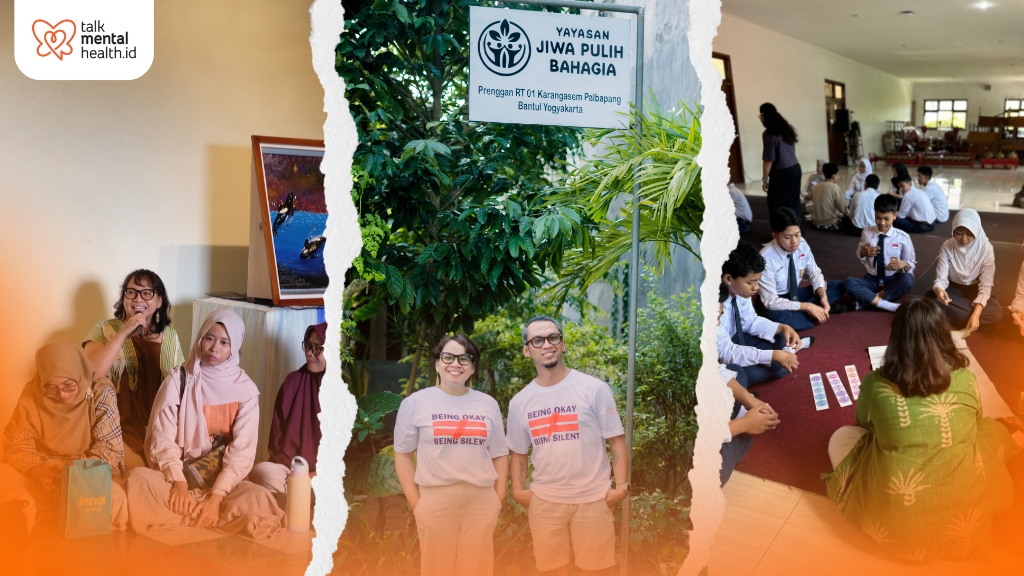
Community mental health in Indonesia is built one conversation at a time. At Talk Mental Health Indonesia (TMH.id), we have learned that meaningful change rarely begins with large-scale initiatives. Instead, it grows through workshops, peer support groups, classrooms, and safe spaces where young people feel heard and understood.
There are seasons in the life of an organization when progress feels slow. The work unfolds one workshop at a time, one support group at a time, and one meaningful conversation after another. Much of the impact happens quietly, making it easy to overlook how far the journey has come.
This week was one of those moments that invited us to pause and reflect. Talk Mental Health Indonesia (TMH.id) was invited to join a national multi-stakeholder mental health coalition and to attend the presentation of the Regional House of Representatives (DPRD) of Yogyakarta’s final study on the mental health of Generation Z and Generation Alpha. To many, these may simply appear to be invitations to meetings. To us, however, they represent something much deeper: a sign that community voices the stories, experiences, and realities of young people are beginning to find their place in conversations that shape mental health policy in Indonesia.
The Journey Began Long Before TMH.id
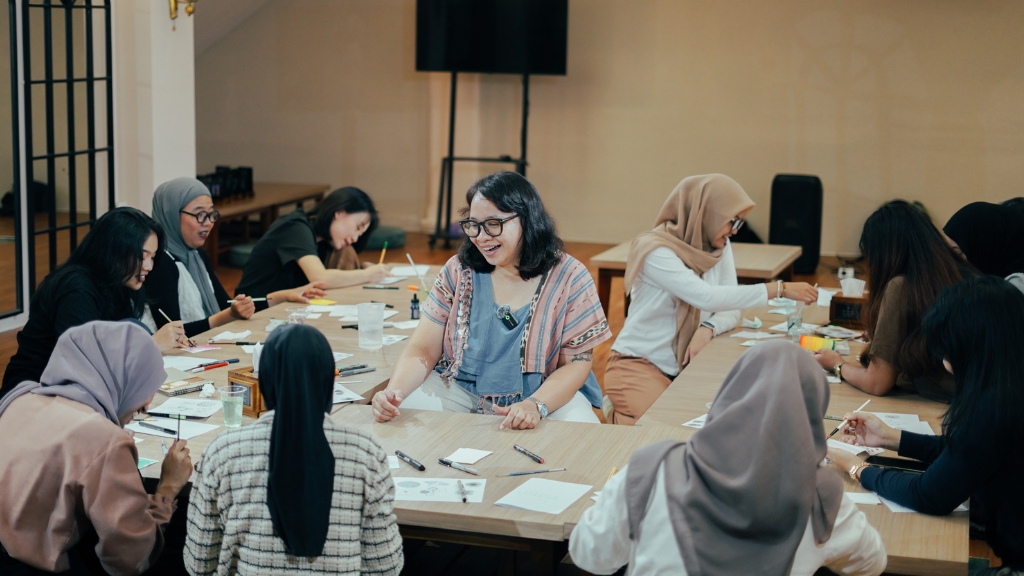
This journey did not begin with an invitation to a policy forum. It began many years ago with a young girl sitting in a junior high school classroom, sensing that something was deeply wrong but lacking both the language and the support to understand what she was experiencing.
As recently shared in Kompas, our Co-Founder and Programme Lead, Fransisca Christanti Tri Wulandari, reflected on her adolescence and the years she spent living with chronic anxiety and struggling with self-harm. At the time, mental health was rarely discussed openly, and asking for help did not feel like an option. Like many young Indonesians, she grew up believing she simply had to carry those emotions on her own.
Her story is deeply personal, but it reflects a much broader reality. The World Health Organization estimates that one in seven adolescents aged 10–19 lives with a mental health condition, and that half of all mental health conditions begin before the age of 14. Yet many young people go unrecognized and unsupported during these critical years. Fransisca’s experience is a reminder that behind every statistic is a young person searching for understanding, connection, and a safe place to ask for help.
Years later, after studying psychology, working abroad, and eventually returning to Indonesia, another turning point emerged. The grief of letting go of a future she had carefully imagined became an invitation to build something new. Rather than allowing that experience to define her, she transformed it into a purpose that eventually became Talk Mental Health Indonesia.
Rather than allowing those experiences to remain personal, she transformed them into something that could serve others. That journey eventually became the foundation of Talk Mental Health Indonesia.
A Community Before an Organization
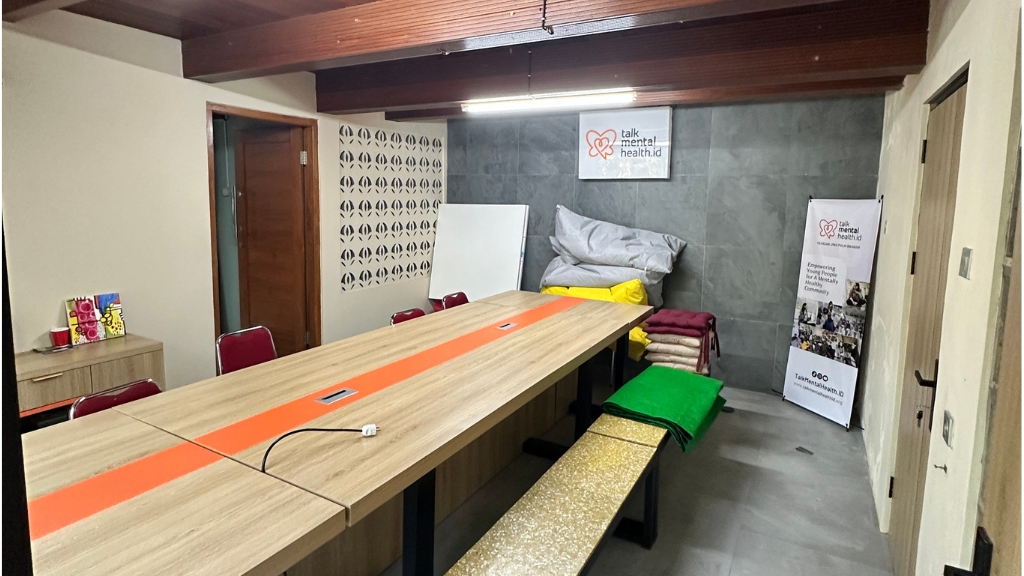
TMH.id was never intended to become just another mental health organization. It was built around a simple belief: healing happens in relationships, and communities have an essential role to play in supporting mental well-being.
Clinical services are indispensable, but they cannot carry the burden alone especially when millions of young people experience emotional distress long before they ever reach a mental health professional. That is why we have invested in peer support, community spaces, creative expression, grief-informed conversations, and culturally relevant approaches that help people reconnect with themselves and with one another.
Many young people are not first looking for therapy. They are looking for someone who will listen without judgment, remind them that they are not alone, and create enough safety for them to take the next step. Community can become that first doorway to healing.
When Community Meets Policy
Perhaps that is why these recent invitations feel particularly meaningful. We are not entering policy spaces because we believe community work is complete. Rather, we are entering them because we believe community work belongs there.
The findings presented during the Yogyakarta mental health study highlighted anxiety as one of the most common challenges experienced by young people, reflecting what we have witnessed in schools, universities, support groups, and community gatherings for years. For us, however, data has never existed separately from people. Behind every statistic is a student overwhelmed by expectations, a teenager carrying grief that has never been acknowledged, or a young adult wondering whether anyone would understand what they are going through.
Research helps us understand the scale of the challenge, while communities help us understand its human reality. Both perspectives are essential if we hope to create responses that are not only evidence-based but also compassionate and relevant to the lives of young people.
Keeping Both Feet on the Ground
As new policy conversations emerge, our commitment to grassroots work only becomes stronger. In the coming months, TMH.id will begin supporting a junior high school in Yogyakarta through school-based mental health initiatives, continuing our efforts to reach young people where they spend much of their everyday lives.
For us, this work is not separate from policy engagement, it is the foundation of it. Policies become meaningful only when they improve real experiences inside classrooms, within families, and across communities where young people are still learning to recognize, name, and navigate their emotions. Sustainable mental health systems require both strong institutions and strong communities; neither can replace the other.
Carrying Community Into Every Room
Looking back, it is remarkable how closely this week’s milestones connect with Fransisca’s personal story. Twenty-five years ago, she was a teenager searching for words to describe what she was feeling. Today, she sits in rooms where conversations about youth mental health are helping shape future directions for Indonesia.
That journey is more than a personal milestone. It reflects why TMH.id exists in the first place not to speak on behalf of communities, but to ensure that communities are represented wherever important decisions are made. Lived experience should not remain at the margins of policy discussions; it should help shape them.
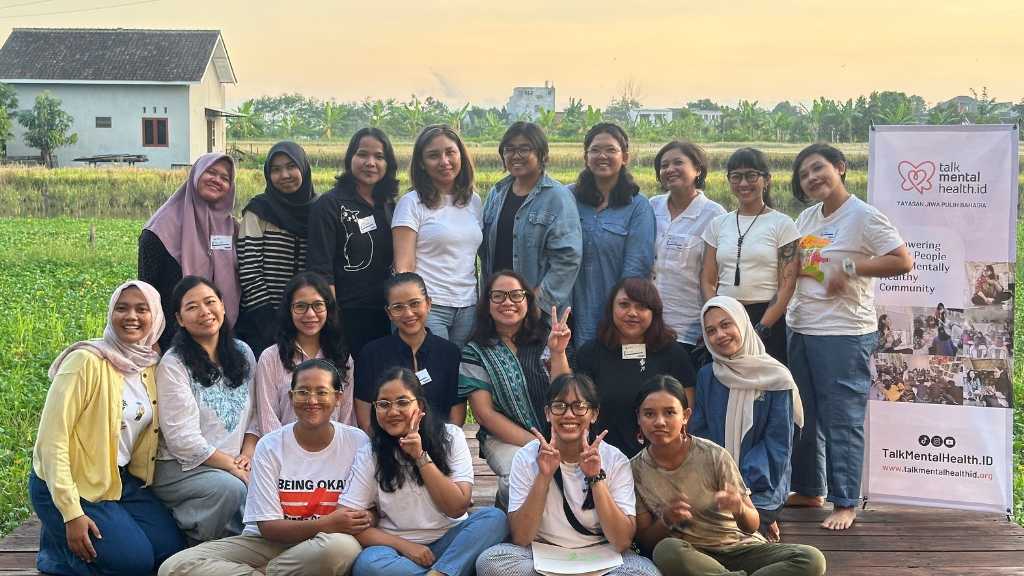
As more doors begin to open, we hope to keep both feet firmly planted. One remains in classrooms, gardens, peer circles, and community spaces where healing begins. The other steps into boardrooms, research forums, and policy discussions where systems can evolve. Every room we enter, we enter carrying our community with us, because meaningful and lasting change happens when lived experience is not only heard, but trusted to help shape what comes next.
The Work Ahead
While these invitations mark an important milestone, they are not the destination.
Indonesia’s mental health landscape continues to evolve, bringing growing awareness alongside equally significant challenges. More young people are willing to speak about their struggles than ever before, yet many still face barriers to accessing support. Schools continue searching for practical approaches to promote well-being. Families are learning new ways to talk about emotions. Communities are discovering that mental health is not solely a clinical issue but a shared social responsibility.
We believe meaningful progress will require all of us, government institutions, educators, healthcare professionals, researchers, civil society organizations, community leaders, artists, and young people themselves to work together.
TMH.id will continue doing what it has always done: creating spaces where people feel safe to be human while contributing those lessons to broader conversations about systems change.
As more doors begin to open, we hope to keep both feet firmly planted. One remains in classrooms, community gardens, support groups, and creative spaces where healing begins. The other steps into research forums, coalition meetings, and policy discussions where systems can evolve.
Every room we enter, we enter carrying our community with us. Because lasting change happens when lived experience is not only heard. It is trusted, valued, and invited to help shape the future.
Want to discover more meaningful and inspiring events from TMH.id?
Explore our community programs, workshops, and safe spaces designed to support mental well-being, personal growth, and genuine human connection. Visit our website to learn more and join our upcoming events.