


Grief Awareness Month is an opportunity to talk more openly about grief, loss, and the different ways people experience bereavement. While grief is a natural response to loss, it can affect much more than our emotions. It can influence our thoughts, relationships, daily routines, physical health, and sense of connection with the world around us.
There is no single way to grieve, and there is no universal timeline for healing. Some people may openly express their sadness, while others may feel numb, angry, overwhelmed, or simply different from how they were before their loss. During Grief Awareness Month, we can use this opportunity to become more compassionate toward ourselves and more supportive of people who are grieving.
Here are ten simple things you can do this Grief Awareness Month to support yourself, someone you care about, or your wider community.
1. Check In on Someone You Care About
During Grief Awareness Month, one simple way to support someone who is grieving is to check in. A message like “How are you doing today?” can remind them that they are remembered and not alone.
Grief can change from day to day, and difficult feelings may return even after time has passed. You don’t need the perfect words—sometimes, simply letting someone know you care can be a meaningful form of support.
2. Listen Without Trying to Fix

During Grief Awareness Month, remember that grief does not always need to be fixed. When someone shares their grief, resist the urge to offer advice or make their pain disappear. Instead, listen, acknowledge their feelings, and be present without judgment.
You don’t need the perfect words. Saying “I’m here if you want to talk” or simply sitting with them can be enough. Sometimes, listening is one of the most meaningful ways to help someone feel less alone.
3. Learn About Grief
During Grief Awareness Month, learning about grief can help us better understand and support people experiencing loss. Grief may involve sadness, anger, guilt, loneliness, numbness, fatigue, difficulty concentrating, or changes in sleep and daily routines—and everyone experiences it differently.
Research by O’Connor highlights that grief is not only an emotional experience but can affect the mind, brain, and body, including stress, cardiovascular, immune, and neural processes. Understanding this can help us take grief seriously as a whole-person experience.
Learning about grief isn’t about knowing how someone should grieve. It’s about creating more space, empathy, and understanding for different experiences of loss.
4. Support Grief Communities and Organizations
During Grief Awareness Month, consider supporting communities and organizations that create safe spaces for people experiencing loss. They can offer connection, education, peer support, and resources for those navigating grief.
You can help by joining an event, volunteering, donating, or simply sharing information about grief support. Small actions can help create spaces where people feel seen, heard, and accepted.
5. Offer Practical Help
6. Create and Share Memories

During Grief Awareness Month, creating and sharing memories can be a meaningful way to honor someone who has died. Talking about them does not mean being stuck in the past; for many people, remembering can be part of adapting to loss and maintaining a connection with their memories.
Look through old photos, listen to a meaningful song, prepare their favorite meal, visit a special place, or share a story. If you know someone who is grieving, don’t be afraid to mention their loved one. Knowing that others remember them can bring comfort and remind them that their loved one is not forgotten.
7. Take Care of Yourself and Be Kind to Yourself
During Grief Awareness Month, remember that you do not have to be strong all the time. Grief can be emotionally and physically exhausting, and research suggests that bereavement can affect the body’s stress responses and other physiological processes—not just how we think and feel.
Try asking yourself, “What do I need today?” It might be rest, food, movement, connection, quiet time, or simply permission to take things slowly.
Self-care does not mean avoiding grief or trying to “move on.” It means listening to what your mind and body need while navigating loss. Be gentle with yourself, especially on days when progress feels difficult.
8. Find a Supportive Community
During Grief Awareness Month, remember that you don’t have to navigate grief alone. Grief can feel isolating, especially when others may not fully understand what you’re going through.
A support group, peer community, trusted friend, or safe space can offer connection and a place to share without judgment. You may not have the same experience, but being with people who can hold space for your grief can make the journey feel less lonely.
You deserve a space where you can be honest about how you’re doing, without having to pretend that everything is okay.
9. Seek Professional Support When Needed

During Grief Awareness Month, remember that seeking professional support is a valid part of navigating grief. If grief feels overwhelming or begins to significantly affect your daily life, talking to a psychologist, counselor, or other qualified professional can provide a safe space to process your experience.
Asking for help does not mean you are grieving “wrong” or that something is wrong with you. You don’t have to wait until things feel unbearable reaching out for support can be an act of self-compassion.
10. Engage in Things That Matter to You
During Grief Awareness Month, reconnecting with meaningful activities can be part of navigating loss. You may not feel motivated at first, and that’s okay. Meaning can gradually return through small things that feel important to you.
This might be creating art, spending time in nature, gardening, helping others, connecting with loved ones, or returning to a meaningful routine. Doing something meaningful doesn’t mean forgetting someone who died, it can be a way of carrying their memories, values, and the lessons they left with you.
You Don’t Have to Go Through Grief Alone
Grief Awareness Month is not only about raising awareness of grief. It is also an invitation to think about how we can show up for ourselves and for the people around us.
We cannot always take away someone’s pain, and we may never find the perfect words to make grief easier. But we can choose to ask how someone is doing, listen without judgment, offer practical support, and stay present even when we do not know exactly what to say.
Sometimes, support begins with something very small: sending a message, making time for a conversation, sharing a meal, or simply sitting beside someone.
This Grief Awareness Month, let us remember that we do not have to fix grief to support someone through it. We can simply make sure they know that they do not have to face it alone.
A Space to Grow Together
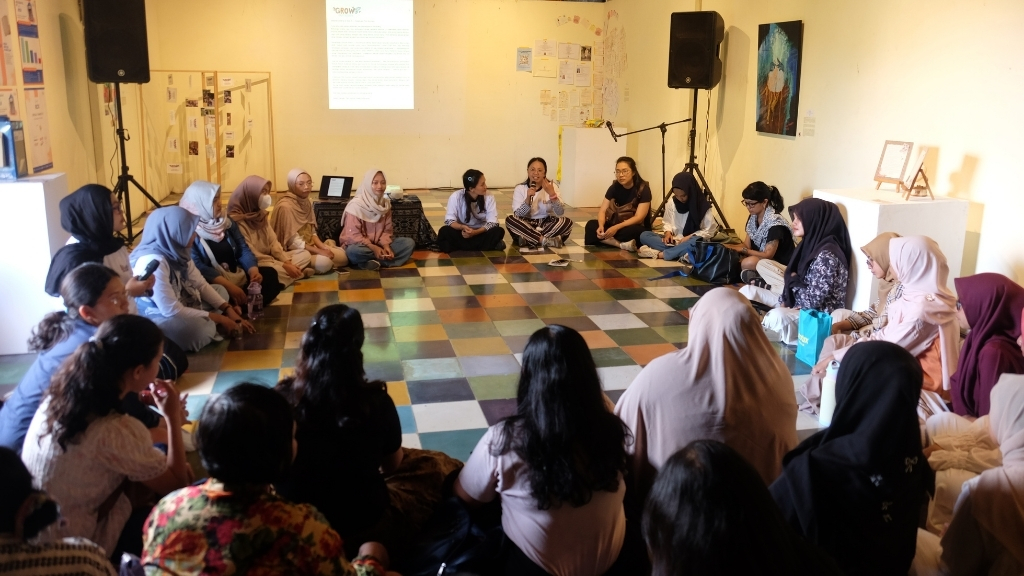
Creating supportive spaces for young people experiencing loss is part of the work of Talk Mental Health Indonesia (TMH.id). Through these spaces, young people can have opportunities to recognize, understand, and express experiences that may be difficult to put into words.
This Grief Awareness Month, TMH.id will once again bring GROW Batch #2—a supportive space for young people to explore experiences of loss, build resilience, and grow alongside others in a safe and supportive environment.
GROW stands for Grief-informed Resilience, Ownership, and Wellbeing. The program recognizes that every person’s experience of loss is different and that young people deserve spaces where their stories can be heard without judgment.
Because every loss deserves to be acknowledged, every story deserves space, and everyone deserves the opportunity to grow.
Coming Soon GROW Batch #2
Follow @talkmentalhealth.id for updates and further information about GROW Batch #2.
Let’s grow together.