

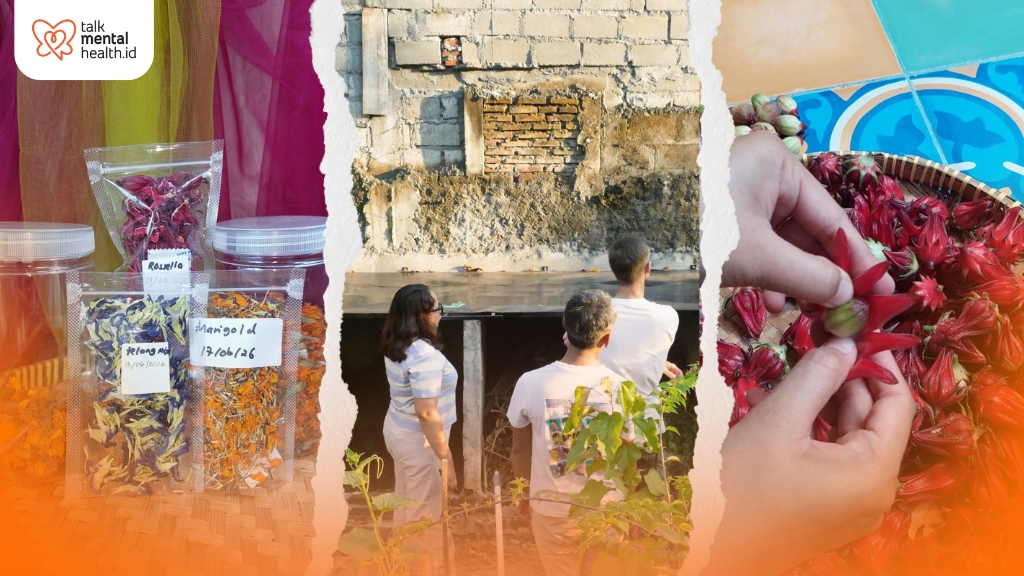
There is a small piece of land beside The Hub, our home in Yogyakarta, that used to be nothing more than empty ground. A few months ago, we decided to rent it, clear it, and simply see what would happen if we allowed something to grow there. At the time, it felt like a small decision. Looking back, it has become one of the most meaningful parts of our work at Talk Mental Health Indonesia.
We named it Tumbuh Space, tumbuh means “to grow” in Indonesian. Yet this place was never intended to be just a garden. It was created as a space where people, communities, and nature could grow together, reminding us that wellbeing extends far beyond the individual.
Mental Health Is More Than What Happens Inside Us
At Talk Mental Health Indonesia, we have always believed that mental wellbeing cannot be separated from the environments that shape our lives. Our relationships, communities, cultural traditions, and connection with nature all influence how we experience stress, loss, recovery, and resilience. Healing does not happen in isolation because people do not live in isolation.
Modern life, however, often encourages us to believe the opposite. We are taught to move faster, solve problems efficiently, and measure success through productivity. Even mental health is sometimes approached as something that needs to be fixed as quickly as possible.
This led us to reflect on two different ways of seeing the world.
We began calling the first Machine Mind. It is the mindset that believes every problem has a straightforward solution if we simply work harder, optimize more, or remain in control. While this way of thinking has its strengths, it often leaves little room for uncertainty, rest, or the slow process of becoming.
The second is what we call Garden Mind. Rather than forcing outcomes, Garden Mind teaches us that growth follows its own rhythm. Like a healthy ecosystem, healing is rarely neat or linear. It unfolds through patience, relationships, seasons of change, and conditions that allow life to emerge naturally.
Before Learning to Grow, We Learned to Give Back
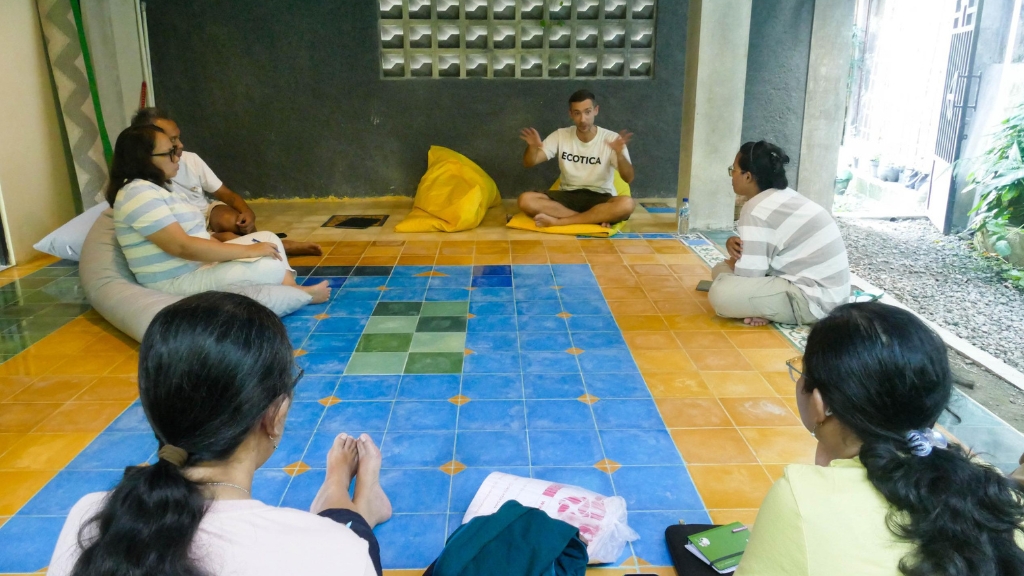
One of the first things we learned in Tumbuh Space was not how to grow flowers but how to make compost. Kitchen scraps, dried leaves, and garden waste slowly transformed into fertile soil through time, microorganisms, moisture, and care. Watching this process challenged many of our assumptions about what growth actually looks like.
Composting reminded us that decay is not the opposite of life. Instead, it is one of the ways life continues. The same principle often applies to emotional healing. Pain, grief, and difficult experiences are not simply obstacles to remove but experiences that can eventually become part of something new when people receive enough support, safety, and time.
As we spent more time working with the soil, we also began to understand that the garden itself was shaping us. Gardening naturally invited us to slow down, pay attention, and reconnect with our surroundings. Rather than rushing toward outcomes, we found ourselves becoming more present observing the texture of the soil, the changing seasons, and the quiet rhythms of growth that cannot be hurried.
This experience reflects what research has increasingly shown. Spending time in green spaces is associated with better mental wellbeing, reduced anxiety and rumination, improved mood, better sleep, and even lower risks of psychiatric disorders. Researchers from the Harvard T.H. Chan School of Public Health suggest that nature offers something modern life often lacks: an opportunity for mental restoration through sensory experiences and a break from the constant stimulation of urban environments. Even small, accessible green spaces such as community gardens or neighborhood parks can provide meaningful benefits for both physical and mental health.
For us, compost became more than a gardening technique. It became a reminder that healing is not about erasing what has happened but about creating the conditions where transformation becomes possible. Just as healthy soil is built by returning nutrients to the earth before expecting anything to grow, our emotional wellbeing also depends on practices that restore us before asking us to keep producing, achieving, or moving forward. That is the philosophy we hope Tumbuh Space continues to cultivate—not only in the garden, but in everyone who spends time within it.
A Garden That Became a Living Laboratory
As the garden grew, so did our curiosity. Instead of focusing only on harvesting plants, we began exploring how every part of the garden could become an opportunity for learning, creativity, and reflection.
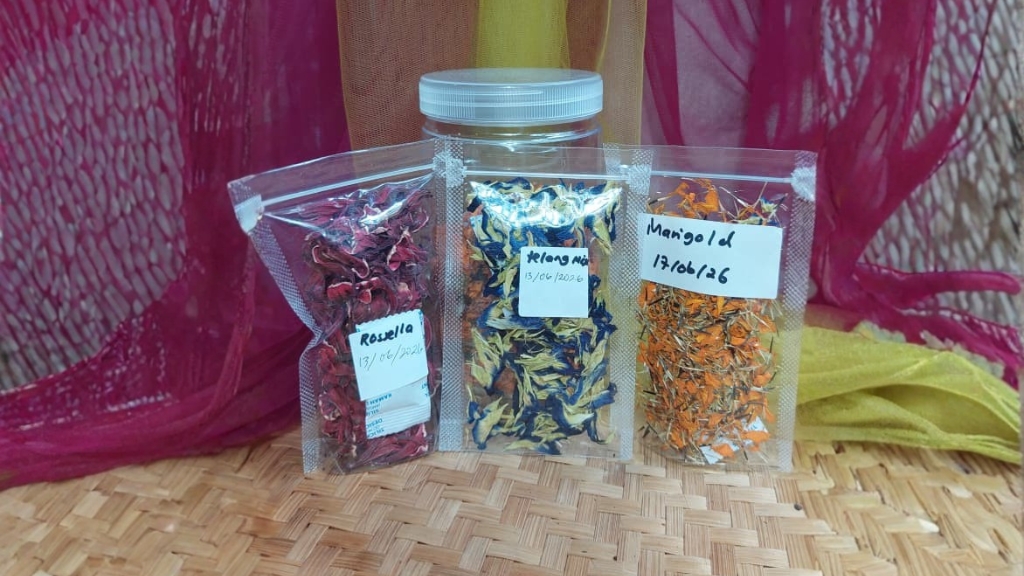
Marigold flowers were transformed into botanical ink used during journaling and art-making in our GROW circles. Rosella, butterfly pea flowers, and roses became herbal teas shared after long days of gardening together. Even the experiments that did not go as planned became valuable lessons, reminding us that growth is rarely about perfection but about staying curious enough to keep learning.
When Nature Feels Safe, Life Returns
Perhaps the most beautiful part of Tumbuh Space was not what we planted but what arrived on its own. Bees began visiting the flowers. Butterflies appeared among the beds. Birds returned, earthworms enriched the soil beneath our feet, and even squirrels occasionally wandered through the garden.
None of these visitors were intentionally invited. They came because the environment had become healthy enough to support life. For us, this became a powerful reminder that communities work in much the same way. When people experience safety, belonging, and care, connection naturally begins to flourish.
Why Nature Matters for Mental Health
More studies continue to show that spending time in nature can reduce stress, improve mood, and support emotional wellbeing. While we appreciate this growing body of evidence, Tumbuh Space is not simply an example of horticultural therapy. It represents something broader: a reminder that humans have always been part of ecosystems, and our wellbeing is deeply connected to them.
Working with soil, observing insects, brewing tea from flowers we have grown ourselves, or simply sitting quietly beneath the trees all encourage us to slow our bodies down. That slowing down helps regulate the nervous system, making it easier to notice emotions, process difficult experiences, and reconnect with ourselves and others.
Growing Mental Health from Indonesian Soil
Mental health care in Indonesia has benefited greatly from knowledge developed around the world. At the same time, we believe healing also needs to be rooted in local culture, local communities, and local ecosystems. Rather than viewing nature as a backdrop, we see it as an active partner in supporting wellbeing.
Tumbuh Space reflects this vision. It is part of our broader effort to build community mental health approaches that integrate peer support, creativity, ecological awareness, and collective care. We are not replacing clinical services but expanding the ways people can experience healing in everyday life.
Slowing Down to See More Clearly
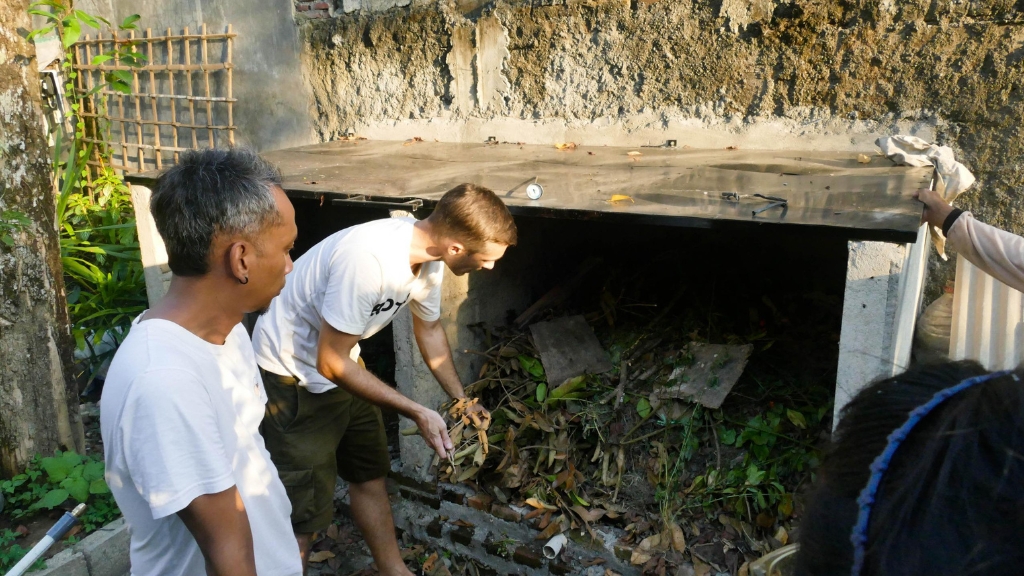
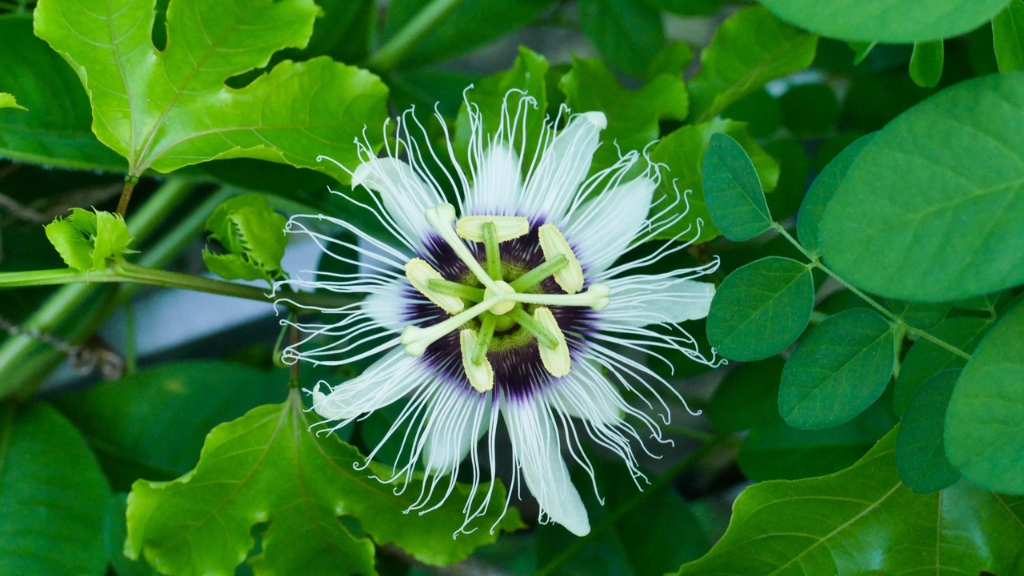
Somewhere between turning compost, making botanical ink, harvesting herbal tea, and watching orchids bloom after weeks of waiting, the garden kept teaching us the same lesson. We do not always need to move faster to move forward. Sometimes, we simply need to slow down enough to notice what has been there all along.
Tumbuh Space is still evolving. New plants continue to grow, new visitors continue to arrive, and every season brings lessons we did not expect. Perhaps that is the most important thing the garden has taught us: healing is never a finished destination. Like a living garden, it is an ongoing relationship that asks us to keep tending, keep learning, and keep growing together.
Cultivating the Conditions for Healing
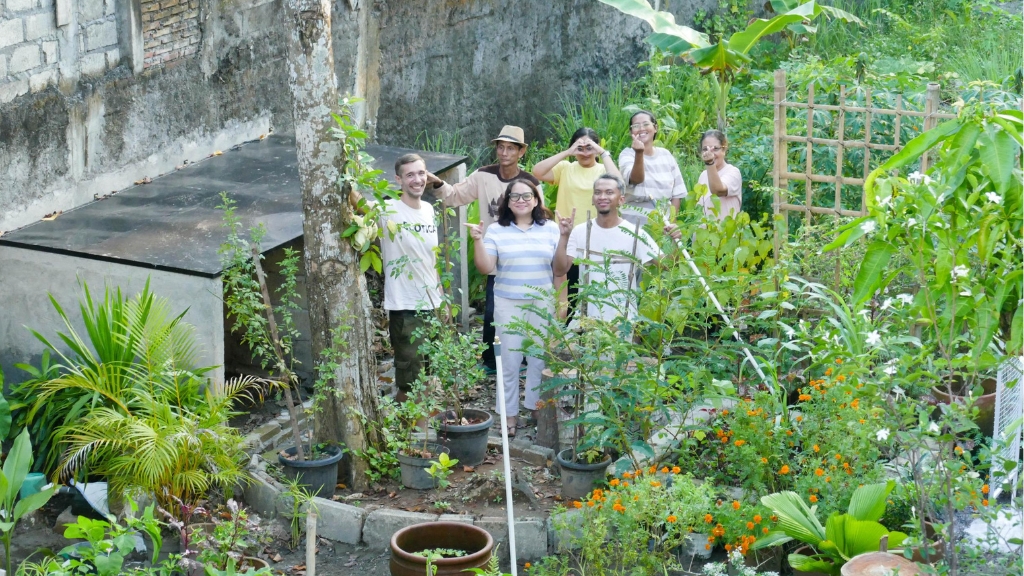
Tumbuh Space is still evolving. New plants continue to grow, new visitors continue to arrive, and every season reminds us that growth is never truly finished. Like the people who spend time here, the garden is constantly adapting, responding, and becoming.
Perhaps that is its greatest lesson. Healing cannot be forced, it emerges when the conditions are right, when people feel safe, connected, and supported, just as healthy soil allows seeds to take root.
At Talk Mental Health Indonesia, this philosophy guides every program we create. Whether through peer support, grief circles, creative expression, or community gardens, our goal is not simply to solve problems but to cultivate the conditions where people and communities can flourish.
In the end, Tumbuh Space is more than a garden. It reminds us that wellbeing grows through connection with ourselves, with one another, and with the natural world. When we care for those relationships, growth often happens in ways we never expected.
Want to discover more meaningful and inspiring events from TMH.id?
Explore our community programs, workshops, and safe spaces designed to support mental well-being, personal growth, and genuine human connection. Visit our website to learn more and join our upcoming events.