

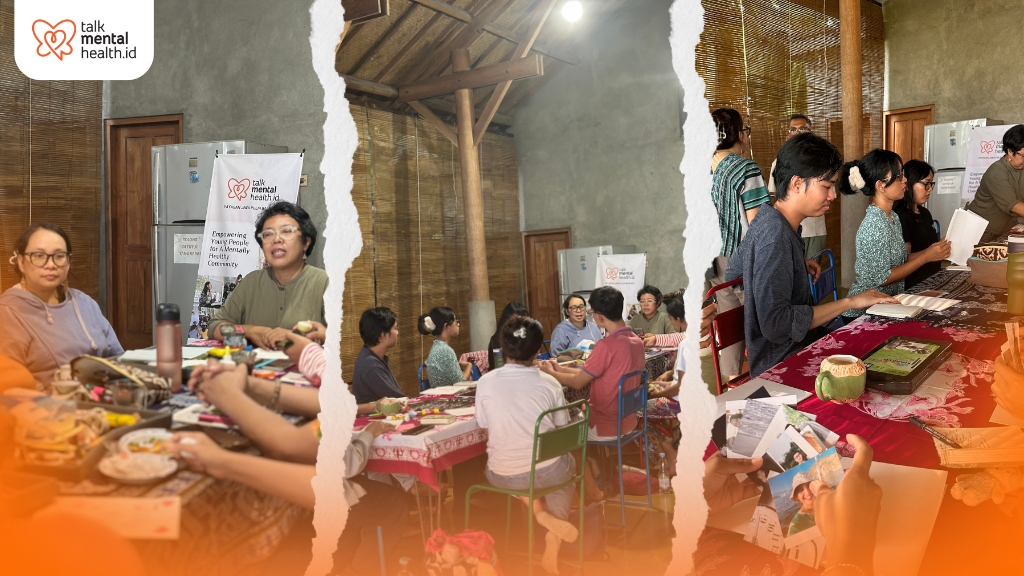
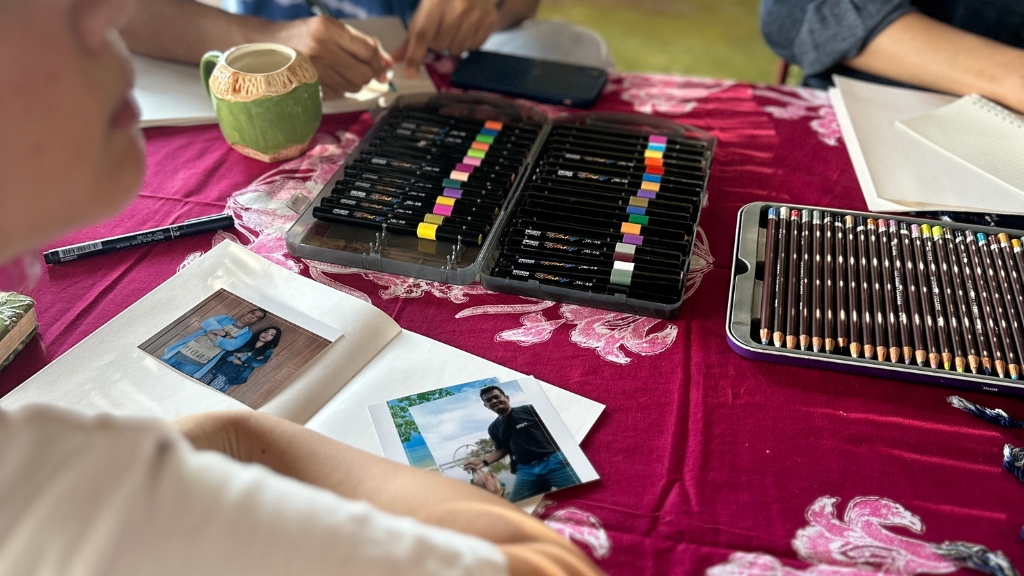
The Zine Workshop hosted by Talk Mental Health Indonesia on Friday evening, May 15th, invited ten participants to bring three photographs that held special meaning in their lives. Not just ordinary photographs, but fragments of memory that carried emotions, stories, and pieces of people they once were.
One photo represented someone or something they had lost.
One captured a moment they still remembered clearly.
And one showed themselves during one of the best moments of their life.
These photographs became the starting point of a deeply personal journey during the Zine Workshop held by Talk Mental Health Indonesia together with Tarlen Handayani, as part of the GROW program. A grief support program created for young people navigating loss and life transitions.
Inside a warm semi-outdoor space surrounded by conversations, art supplies, notebooks, and quiet reflection, participants were invited to create their own zines: small handmade booklets filled with memories, emotions, drawings, writings, and unfinished thoughts that often stay hidden beneath daily routines.
But the workshop was never only about making art.
It was about creating space for grief to exist honestly.
Remembering What Existed Before the Loss
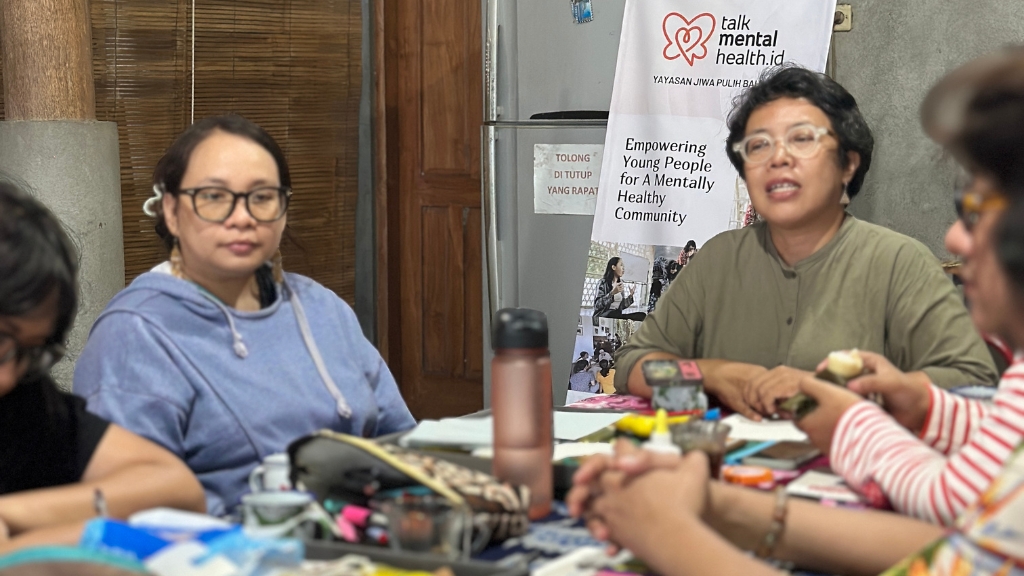
Grief is often associated only with sadness. People talk about the pain of losing someone, the emptiness afterward, or the difficulty of moving on. Yet sometimes, grief also contains beautiful things we are afraid to revisit — love, joy, warmth, belonging, and moments that once made life feel full.
That evening, participants were encouraged not only to remember what they had lost, but also to remember what had existed before the loss happened.
A shared laugh.
A meaningful friendship.
A family memory.
A version of themselves that once felt alive and hopeful.
For some participants, revisiting those memories felt heavy at first. Many of us learn to store grief quietly, placing painful memories into hidden corners because touching them again can feel overwhelming. Over time, silence becomes easier than remembrance.
But through the gentle process of creating zines, writing small notes, arranging photographs, drawing symbols, and sitting with others in shared vulnerability, those memories slowly began to resurface.
Not all at once.
Not dramatically.
Just softly.
And that softness mattered.
More Than a Creative Workshop
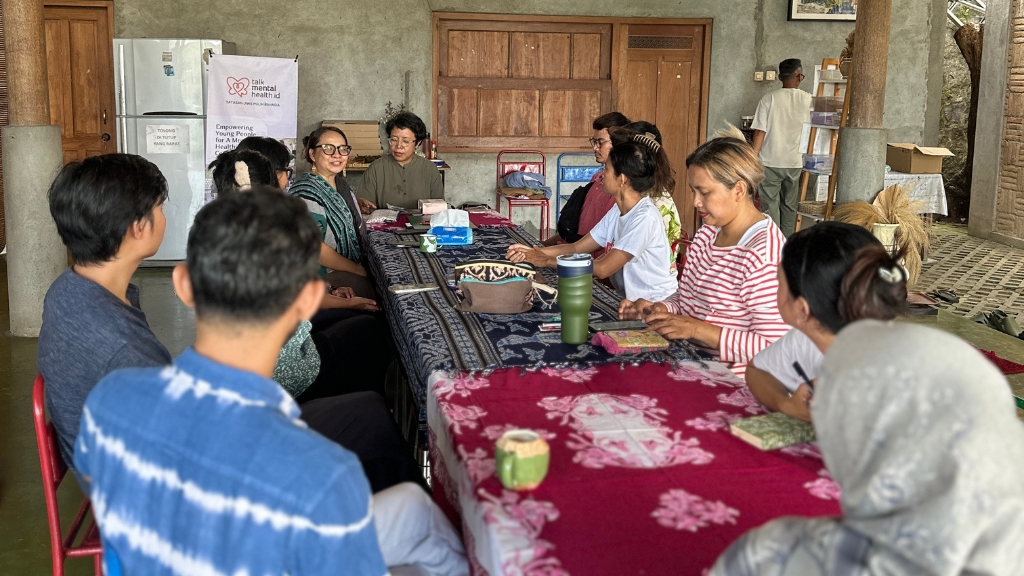
Throughout the session, participants sat together around tables covered with markers, colored pencils, glue, paper scraps, journals, and photographs. Some people wrote continuously, while others paused quietly, looking at old photos before finding the words to continue.
There were moments when the room became very still moments where silence itself felt like part of the conversation.
At other times, small laughter appeared unexpectedly in the middle of emotional stories. Participants remembered funny details, forgotten memories, and little pieces of life that still carried warmth despite the loss.
Slowly, the workshop became more than a creative activity.
It became a space where participants could exist honestly without needing to minimize their emotions.
In everyday life, grief is often rushed. People are expected to “move on,” stay productive, and return quickly to normal routines. Young people especially rarely have safe spaces where grief can be processed openly and collectively.
This workshop offered something different.
No one was asked to hide what they felt.
No one was pressured to have answers.
No one needed to pretend they were okay.
Instead, participants were simply invited to be present with themselves and with one another.
Research on art therapy and mental health also shows that creative expression can help people process emotions that are difficult to communicate through words alone. Community-based art activities can support emotional healing, self-reflection, connection, and meaning-making — especially during experiences of grief and loss. Through writing, drawing, and arranging memories into zines, participants were given space to revisit their emotions gently and safely.
That evening, the zines became more than handmade booklets.
They became quiet containers for memory, love, longing, and survival.
The Quiet Power of Being Witnessed
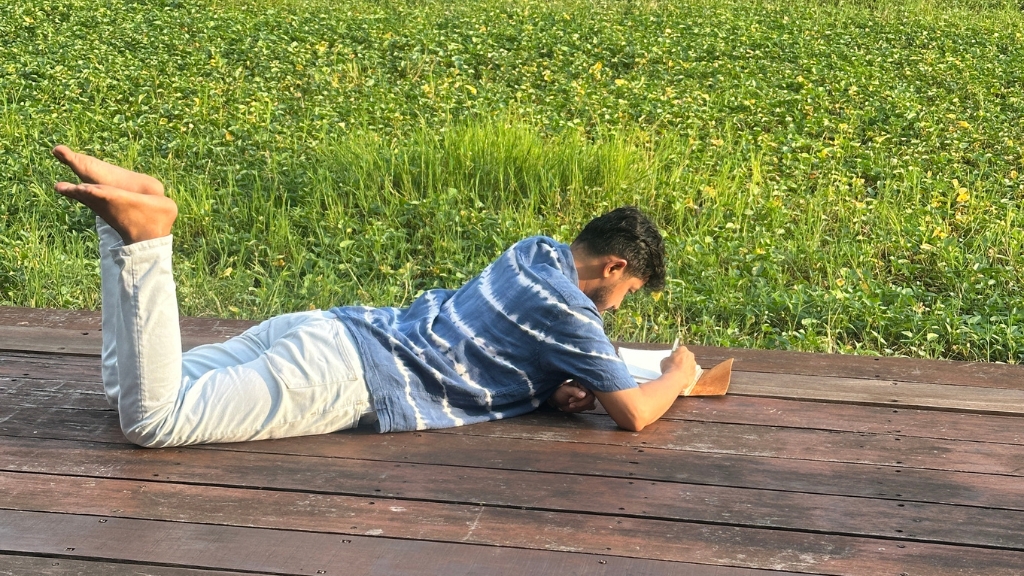
One of the most meaningful parts of the evening was the feeling of togetherness that naturally formed in the room.
The ten participants came from different backgrounds and carried different kinds of losses. Some losses were recent. Others had been carried quietly for years. Yet despite their differences, everyone shared the experience of sitting together with memories that still mattered deeply.
And sometimes, that alone can be healing.
Not because pain disappears instantly, but because grief often becomes lighter when it is witnessed by others with care.
There is something powerful about realizing that you are not the only person carrying complicated emotions. There is comfort in hearing someone else describe feelings you thought only existed inside your own mind. There is relief in being surrounded by people who do not rush your process.
Throughout the workshop, participants gently listened to each other’s stories, observed one another’s creations, and shared moments of quiet understanding.
No one tried to fix each other.
People simply stayed.
And in many ways, staying is one of the most important forms of support we can offer someone experiencing grief.
Art as a Doorway to Healing
Creative expression has long been a way for people to process emotions that are difficult to explain through ordinary conversation. Sometimes words alone are not enough to hold the complexity of grief.
Art allows emotions to move differently.
Through the zines, participants expressed longing, confusion, gratitude, sadness, love, anger, and hope. Some pages were colorful and playful. Others were minimal and raw. Some included handwritten reflections, while others relied mostly on images and symbols.
Each zine became deeply personal not because it was perfect, but because it was honest.
The process reminded participants that healing does not always happen through big breakthroughs. Sometimes healing begins quietly, through small acts of remembering, creating, and allowing ourselves to feel.
Sometimes healing looks like:
- writing one honest sentence,
- touching an old photograph again,
- sharing a story out loud for the first time,
- or realizing that tears do not make us weak.
Grieving Should Not Happen Alone
At Talk Mental Health Indonesia, we believe that mental health support should include spaces where people can process not only stress and anxiety, but also grief, change, heartbreak, and emotional loss.
The GROW program was created from that belief.
Grief is a deeply human experience, yet many young people go through it in isolation. Some feel misunderstood. Some feel pressured to “be strong.” Others do not even realize that what they are experiencing is grief.
Programs like this workshop are small reminders that there are healthier and more compassionate ways to hold difficult emotions together.
Healing does not always require having everything figured out.
Sometimes what people need most is:
a safe room,
gentle conversations,
creative expression,
and the reminder that they do not have to carry everything by themselves.
Thank You for Growing Together
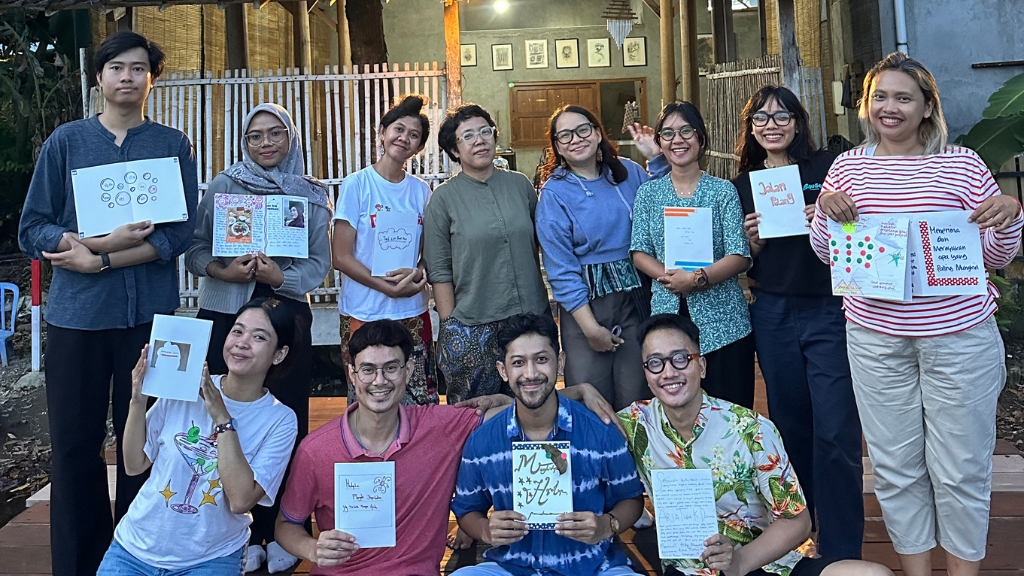
We would like to express our deepest gratitude to Tarlen Handayani for creating and holding such a warm and compassionate space throughout the workshop.
And thank you to every participant who came with courage, openness, and trust.
Thank you for bringing your memories into the room.
Thank you for allowing your stories to be seen.
Thank you for reminding one another that even in grief, connection is still possible.
This Zine Workshop was part of GROW by Talk Mental Health Indonesia — a grief support and companionship program for young people who are learning that grieving does not have to happen in silence or isolation.
Because even after loss, we still deserve spaces where we can feel seen, heard, and held together.
Want to discover more meaningful and inspiring events from TMH.id?
Explore our other community programs and workshops on our website.