There are parts of our lives that we don’t fully arrive in—not because we don’t care, but because we don’t always have the space. We move from one thing to another, finishing tasks, meeting expectations, and showing up for others, while something inside us quietly asks to be noticed. Sometimes it is a feeling we cannot name. Sometimes it is a heaviness that comes and goes. Sometimes it is a memory that lingers longer than we expected. For many people, this is exactly why a grief support group can matter: not because everything is clear, but because there needs to be a safe place to begin.
And most of the time, we keep going anyway, because we’ve learned how to. We’ve learned to minimise what we feel, compare our pain with others, tell ourselves “it’s not that bad,” or simply avoid asking the question at all: What is actually happening inside me? A grief support group does not take away pain instantly, but it can offer space to pause, to feel, and to slowly understand what we have been carrying alone.
The Kind of Grief We Don’t Talk About
When we hear the word grief, we often think of loss that is visible and recognised.
But much of the grief people carry—especially young people—does not look like that.
It lives in quieter places.
It can look like:
- growing up in an environment where you didn’t feel fully seen
- losing a sense of safety without knowing when it changed
- watching relationships shift without closure
- carrying expectations that never felt like your own
- becoming someone you don’t quite recognise anymore
These are not always labelled as grief. But they are still forms of loss.
And when they are not named, they often stay in the body, in patterns, in relationships shaping how we move through life without us fully realising it.
As also reflected in guidance by UNICEF, grief is not always obvious or linear. It can affect how we feel, think, and relate to others, and when it is not expressed or acknowledged, it often stays within us—making the process of understanding and coping even more difficult.
Many young people are not lacking strength. They are lacking space. Space to:
- pause
- feel
- make sense of what they carry
- and not be rushed into solutions
Because grief cannot be rushed, and healing does not begin with pressure to “move forward,” but with space to express, to be supported, and to slowly understand what is happening inside.
This is the gap where GROW was created.
What If Healing Didn’t Start With Fixing?
In many spaces, when we talk about mental health, the focus quickly shifts to:
- coping strategies
- problem-solving
- or “what to do next”
While these are important, they often come too early.
Because before we know what to do, we need to understand what we are holding.
And before we understand, we need a space where it feels safe enough to look.
GROW begins with a different premise:
- Not everything needs to be solved immediately.
- Some things need to be witnessed, slowly and without pressure.
GROW as a Space Not Just a Program
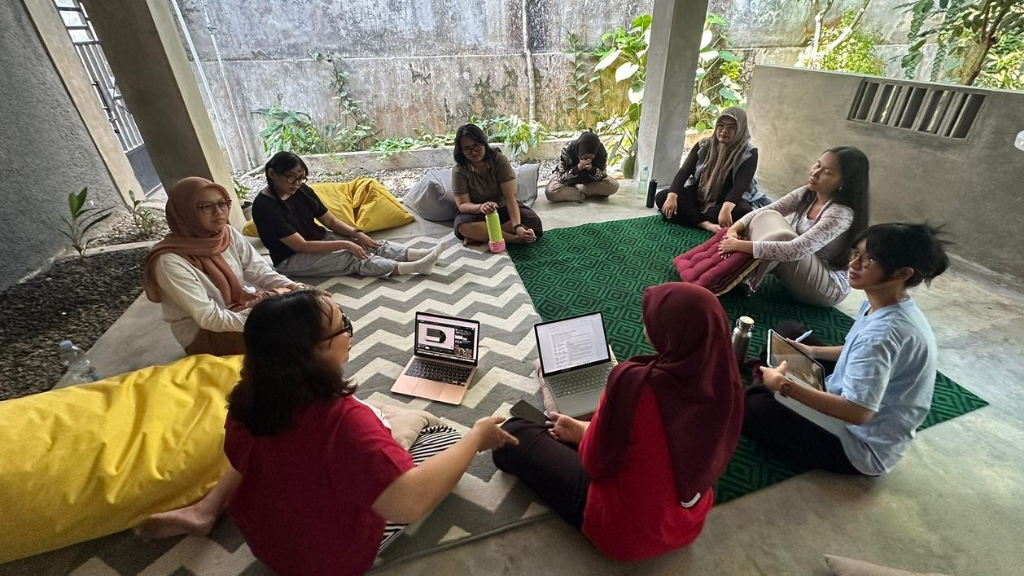
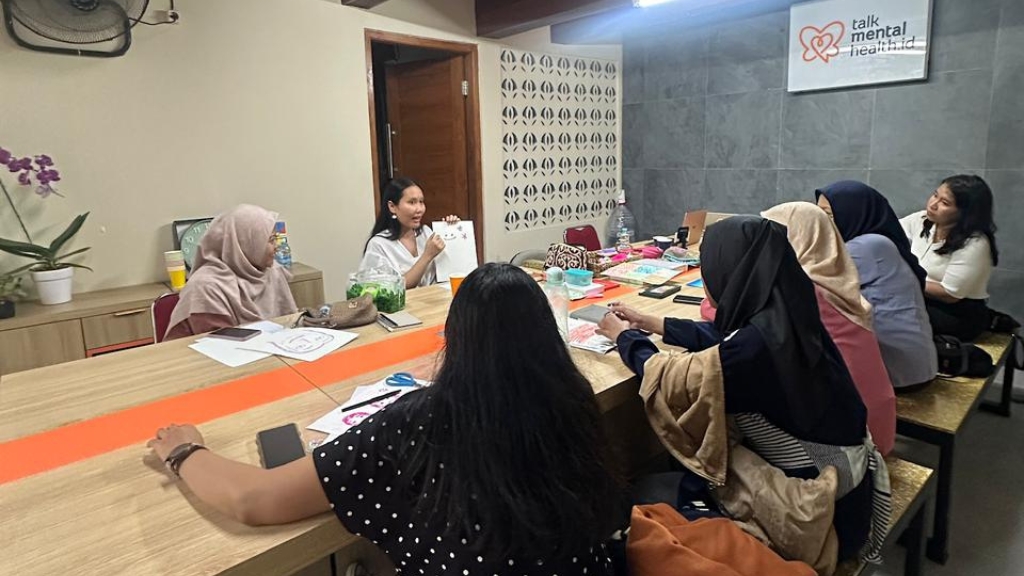
GROW (Grief-informed Resilience, Ownership, and Wellbeing) is designed as a non-clinical, peer-supported support group for young people to process different forms of grief. But more than a program, it is an environment.
This year, GROW is entering its first official batch.
Before this, we held a series of modelling sessions—smaller, more intentional spaces where we explored how this support group could be held. These sessions became a place for us to listen closely: to what felt safe, what felt too fast, and what participants actually needed when they were given space to sit with their experiences.
From there, the module has been carefully refined—not only based on theory, but shaped by real feedback and lived experience. What you see in this first batch is a process that has already been tested, felt, and adjusted to be more grounded and more attuned to participants’ needs.
At the same time, this space is not built by facilitators alone.
Some of the participants from those earlier sessions have now stepped into the role of peer facilitators. They have gone through a dedicated training process to prepare them to hold space more responsibly—while also learning to embrace their own lived experiences, not as something to hide, but as something that can support others in this support group.
You can read more about the peer facilitator journey here: Holding Grief Spaces with Care and Responsibility.
Starting Before the Support Group Begins
Before the support group begins, we are also opening a softer entry point through the Grief Box campaign. This pre-session initiative is designed for those who may not yet feel ready to join a group, but still need a space to express what they carry. Through the Grief Box, anyone can anonymously write and release thoughts, feelings, or experiences that feel too heavy to hold alone.
In many ways, the Grief Box is an invitation to begin without pressure. It offers a quieter, more accessible way to acknowledge what is present—especially for people who may still be unsure, overwhelmed, or not yet ready to speak in a shared space. Sometimes, healing starts not with a full conversation, but with a small act of honesty: writing down something we have been holding for too long.
It is simple, but intentional.
A way to begin slowly.
You can read more about the Grief Box campaign in Yogyakarta here: Grief Box Yogyakarta: Expressing Grief, One Note at a Time.
Working With More Than Words
One of the limitations of many support spaces is that they rely heavily on talking. But not all experiences are verbal. Some are stored in the body, felt as sensation, or held as something we do not yet fully understand. That is why the GROW Programme is designed as a support group that works across multiple layers of experience, creating space for participants to explore what they carry in ways that feel gentler and more human.
1. Expression Beyond Language
In GROW, expression is not limited to conversation alone. As part of this support group, participants are invited to explore journaling, expressive writing, visual art, and symbolic reflection—not as performance, and not as something that needs to be “good,” but as a way to gently ask: What is here, if I do not try to control it?
2. The Body as a Starting Point
GROW also recognises that many emotional experiences are not only mental, but physical. Tension, tightness, fatigue, numbness, or restlessness can all become part of the story. Through simple body-based practices, participants in this support group begin to notice where emotions live, how the body responds, and what regulation might begin to feel like—not as a technique to master, but as a relationship to rebuild.
3. Nature as a Quiet Companion
Nature, too, becomes part of the process. In the GROW Programme, nature is not simply a setting, but a quiet companion. Being in nature often allows something subtle to happen: the pace slows down, attention shifts, and the body softens. Participants in this support group are invited to sit, observe, and reconnect—not to escape their experience, but to feel it in a different way.
4. Peer Support as an Ecosystem
Rather than positioning participants as people who need to be “fixed,” GROW is held through a peer-supported ecosystem. With peer facilitators, access to peer counselors, and shared group reflection, this support group offers connection without hierarchy, support without dependency, and presence without pressure.
A Six-Week Journey That Moves Gently
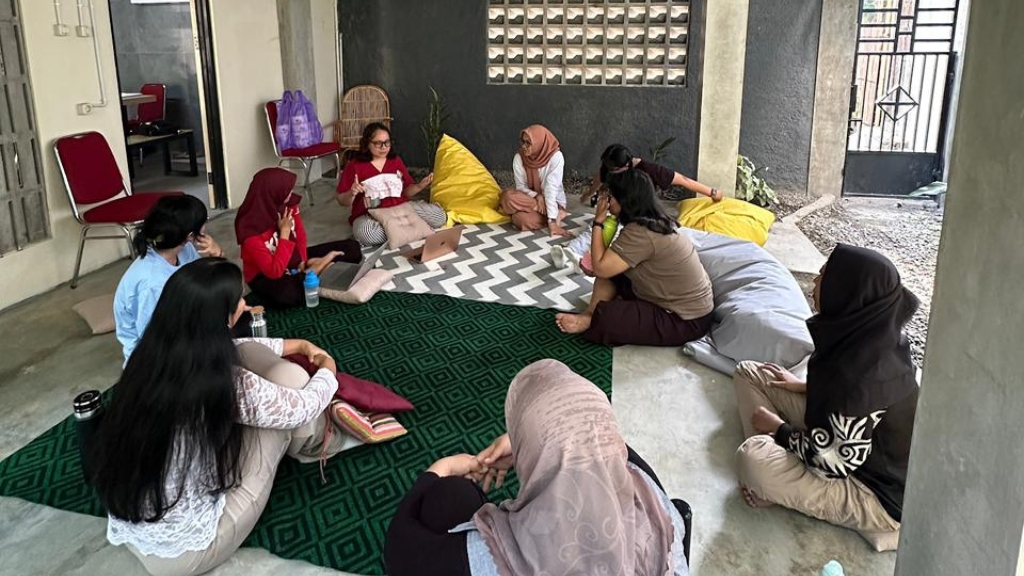
Each week in GROW is not about achieving something.
It is about opening a layer.
- Week 1 — Beginning with Safety
Creating agreements, understanding grief, and building trust - Week 2 — Expression Without Shame
Allowing emotions to be expressed without judgment - Week 3 — When the Body Holds Too
Exploring how experiences live in the body - Week 4 — Rooting in Nature
Slowing down and reconnecting through the natural environment - Week 5 — Finding My Compass
Reflecting on values, strengths, and direction - Week 6 — Sharing the Journey
Closing through gentle witnessing and creative sharing
The final week is not about performance.
It is about:
- acknowledging the journey
- recognising what has shifted
- and allowing stories to be held—if participants choose to share
What Actually Changes in Six Weeks?
Not everything.
And that is intentional.
GROW does not promise transformation in a short period of time.
Instead, it focuses on early, meaningful shifts.
These shifts may look like:
- having language for something that was once confusing
- feeling slightly safer in your own emotions
- recognising that your experience is valid
- becoming more open to support
- noticing small ways to regulate yourself
They are quiet shifts.
But often, they are the ones that last.
What Participants Take With Them
At the end of the program, what participants bring home is not a “solution.”
It is something more subtle, but more sustainable:
- a sense that they are not completely alone
- an experience of being in a space that feels safe enough
- simple tools for reflection and regulation
- a softer relationship with themselves
- and the possibility that healing can happen in connection, not isolation
Who This Space Is For
GROW is for those who are:
- carrying something they cannot fully explain
- feeling overwhelmed, disconnected, or emotionally tired
- searching for a space that does not rush them
- open to exploring healing beyond just talking
It is also for those who are unsure.
Those who don’t know if their experience is “enough.”
Those who feel like they should be okay—but aren’t.
You Don’t Have to Be Ready
There is a common hesitation people carry:
“I don’t think I’m ready for something like this.”
But readiness is not a requirement here.
You don’t need:
- clarity
- a complete story
- or even the right words
You only need a small willingness to arrive.
Even if that arrival looks like:
- sitting quietly
- listening
- or simply being present
You don’t have to be okay to begin.
Program Details
- Start Date: 18 April 2026
- Duration: 6 weeks
- Time: Every Saturday, 14:00 onwards
- Location: Yogyakarta (offline)
- Participants: 15–20 people
- Commitment Fee: IDR 35,000 per session
- Age: 18+
What If You Didn’t Have to Carry It Alone?
Maybe healing does not begin with strength. Maybe it begins with being seen, being allowed to slow down, and being in a space where nothing is forced. Maybe it begins when something inside you realises: I do not have to carry this by myself anymore.
GROW is not here to fix you. It is here to sit with you, gently, as something begins to shift. If this feels like a space you have been needing, we invite you to join GROW: From Grief to Grounding, a 6-week support group where you can process what you carry slowly and without pressure. You can learn more here: GROW: From Grief to Grounding.
And if you’re not ready to join a group just yet, you can still begin in a quieter way.
We’ve placed Grief Boxes in several youth-friendly spaces across Yogyakarta, accessible entry points for you to release what feels heavy, even anonymously.
You can find the Grief Box at:
- Palka Art n Craft
- GitGud Board Game & Cafe
- Warung Pelan-Pelan
- Kaimana Coffee
- Mojok Book Store
You can come by, take a moment, and leave a piece of what you’ve been holding slowly.
For more details about the Grief Box and how it works.
Whether you choose to sit with your thoughts through writing, or to walk this journey with others through GROW, both are valid ways of beginning.
You don’t have to rush.
You don’t have to explain everything.
You can start from where you are.