

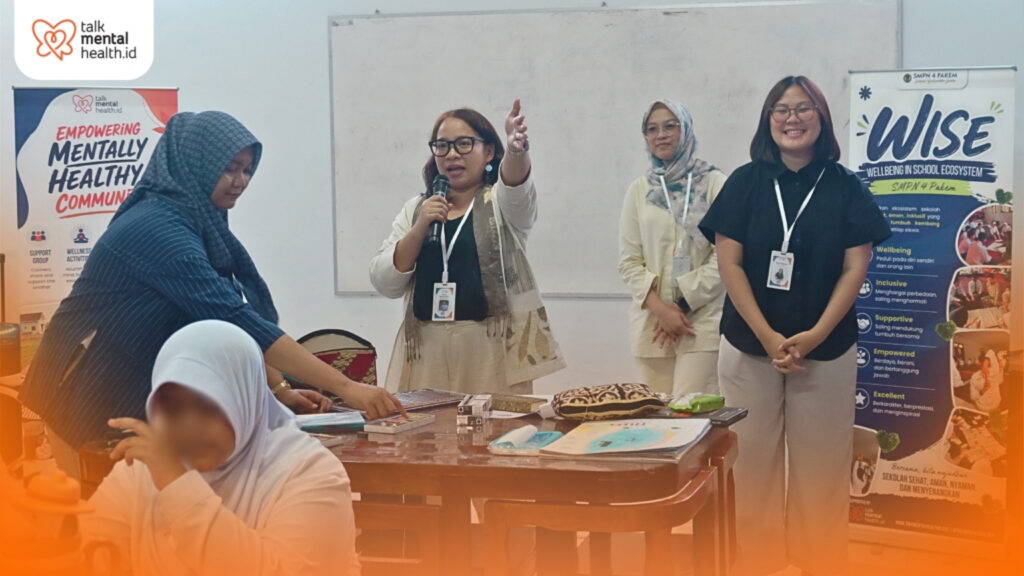
When we think about mental health in schools, we often picture a school counselor supporting students one by one. Yet, the wellbeing of young people cannot rest on the shoulders of one person alone.
What if teachers, parents, and boarding supervisors shared the same understanding of how to support students’ mental wellbeing?
This question inspired WiSe (Wellbeing in School Ecosystem), a collaborative initiative between Talk Mental Health Indonesia (TMH.id) and SMP Negeri 4 Pakem. Through a Wellbeing in School Ecosystem approach, WiSe strengthens the entire school community so that every young person is surrounded by informed, compassionate, and consistent support.
Why Schools Need an Ecosystem Approach
Early adolescence (11–15 years) is a critical period of emotional, social, and psychological development. Alongside academic demands, young people navigate identity, relationships, family expectations, and, for some, the transition to boarding school.
Although schools increasingly recognise the importance of mental health, support often remains fragmented. Teachers, parents, and boarding supervisors may all want to help, but they frequently work in isolation.
Young people do not grow alone, they grow within relationships. Supporting student wellbeing therefore requires a Wellbeing in School Ecosystem, where educators, families, and caregivers share responsibility for creating a safe and supportive environment.
Introducing WiSe
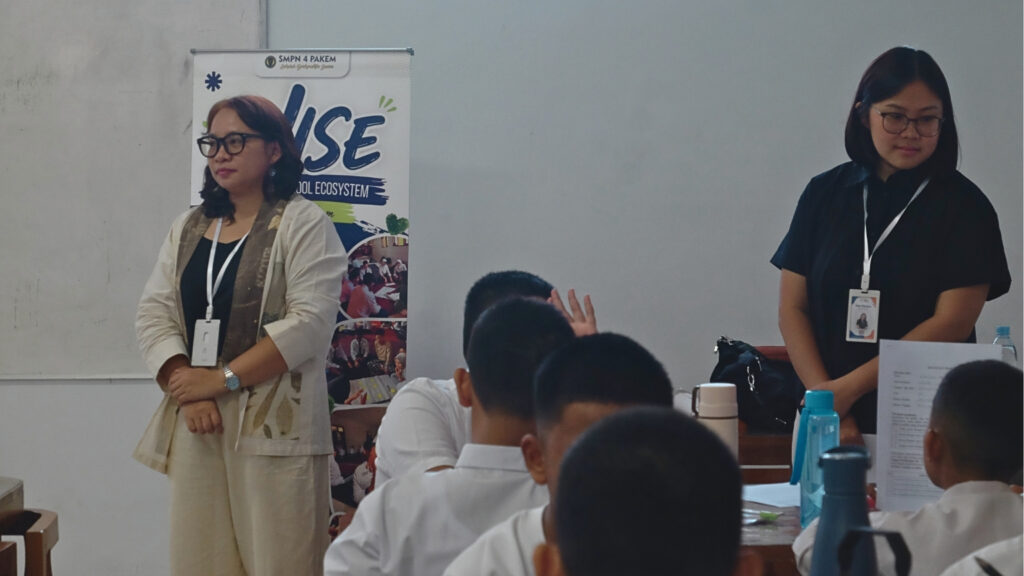
WiSe (Wellbeing in School Ecosystem) is a school-based psychosocial support programme for students in Grades 7–9 at SMP Negeri 4 Pakem. As a Wellbeing in School Ecosystem initiative, WiSe integrates psychosocial support, mental health promotion, and community collaboration into everyday school life.
Guided by the tagline “Growing Wise, Growing Whole,” the programme encourages schools to foster not only academic achievement but also emotional resilience, healthy relationships, and psychological wellbeing.
The programme is built upon four guiding principles.
- Non-clinical. Mental health support should be approachable and integrated into everyday school life rather than limited to clinical settings.
- Strengths-based. Every young person possesses unique strengths. WiSe focuses on helping students recognise and develop these strengths instead of concentrating solely on their difficulties.
- Trauma-informed. Students’ behaviours, emotions, and learning experiences are often influenced by past experiences. Understanding this allows adults to respond with empathy instead of judgement.
- Culturally rooted. While grounded in evidence-based practice, WiSe is designed to reflect Indonesian values, local culture, and the realities of school communities.
Beyond Assessment: A Year-Long Journey
Unlike one-off mental health campaigns or awareness workshops, WiSe is designed as a continuous journey throughout the academic year. Assessment is only the beginning. From there, students and the adults who support them receive ongoing guidance that evolves alongside their needs.
Understanding Students’ Wellbeing
The programme begins with a psychosocial assessment using validated tools such as SADH and DASS. While DASS helps identify symptoms of depression, anxiety, and stress, Keyes’ Complete State Model of Mental Health (2005) suggests that mental health is more than the absence of mental illness. It also encompasses emotional, psychological, and social wellbeing, all of which are essential for young people to thrive.
To capture this broader picture, the assessments are complemented by creative expressive activities, including soft pastel drawing inspired by marine themes. These activities provide students with a safe, non-verbal way to express thoughts and emotions that may not emerge through questionnaires alone, offering a more holistic understanding of their wellbeing.
Continuous Psychosocial Support
Assessment findings become the foundation for ongoing psychosocial support throughout the school year. Depending on emerging needs, support is provided through both small-group sessions and individual follow-up.
Rather than offering temporary solutions, WiSe aims to accompany students as they navigate the everyday challenges of adolescence.
Learning Practical Self-Regulation Skills
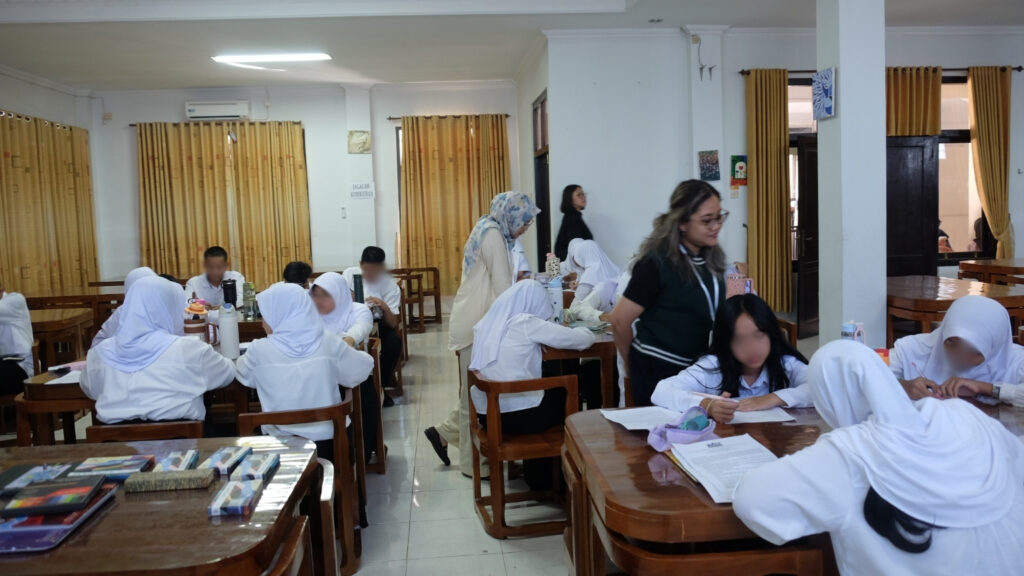
Emotional wellbeing is also strengthened through regular relaxation sessions that incorporate breathing techniques and body-based self-regulation practices.
These sessions equip students with practical tools to manage academic stress, social pressures, and overwhelming emotions independently skills they can continue using long after the programme has ended.
Supporting the Adults Around Students
A strong Wellbeing in School Ecosystem depends not only on students but also on the adults who support them every day. That is why WiSe provides psychoeducation for teachers, boarding supervisors, and parents, building a shared understanding of adolescent mental health, supportive communication, and early response strategies.
By strengthening the capacity of adults across the school community, the Wellbeing in School Ecosystem ensures that students receive consistent, compassionate support both at school and at home.
Creating a Shared Language Around Mental Health
Many challenges arise not from a lack of care, but from a lack of shared understanding. A teacher may see laziness, while a parent sees difficult behaviour, when a student is actually struggling with anxiety, grief, or emotional overwhelm.
By creating a shared language around mental health, WiSe strengthens the Wellbeing in School Ecosystem, helping schools build stronger relationships, reduce stigma, and foster a culture where supporting wellbeing becomes everyone’s responsibility.
Our Vision
At Talk Mental Health Indonesia, we believe schools should be more than places where young people pursue academic success, they should be communities where students feel emotionally safe, genuinely heard, and supported to reach their full potential. By equipping teachers, engaging parents and caregivers, and embedding mental health into everyday school life, we aim to foster a culture where wellbeing is a shared responsibility rather than an occasional programme.
By building a sustainable Wellbeing in School Ecosystem, schools can become places where wellbeing is embedded into everyday learning and relationships. Because no young person grows alone, WiSe envisions school communities where every student has the opportunity to flourish academically, socially, and emotionally, surrounded by relationships built on trust, empathy, and belonging.
About WiSe
WiSe (Wellbeing in School Ecosystem) is a collaborative initiative between Talk Mental Health Indonesia (TMH.id) and SMP Negeri 4 Pakem. The programme integrates psychosocial assessment, ongoing student support, self-regulation sessions, and psychoeducation for teachers, parents, and boarding supervisors to create a sustainable school wellbeing ecosystem. Guided by the philosophy “Growing Wise, Growing Whole,” WiSe aims to foster school communities where every young person can thrive emotionally, socially, and academically.
Join Us in Building Healthier School Communities
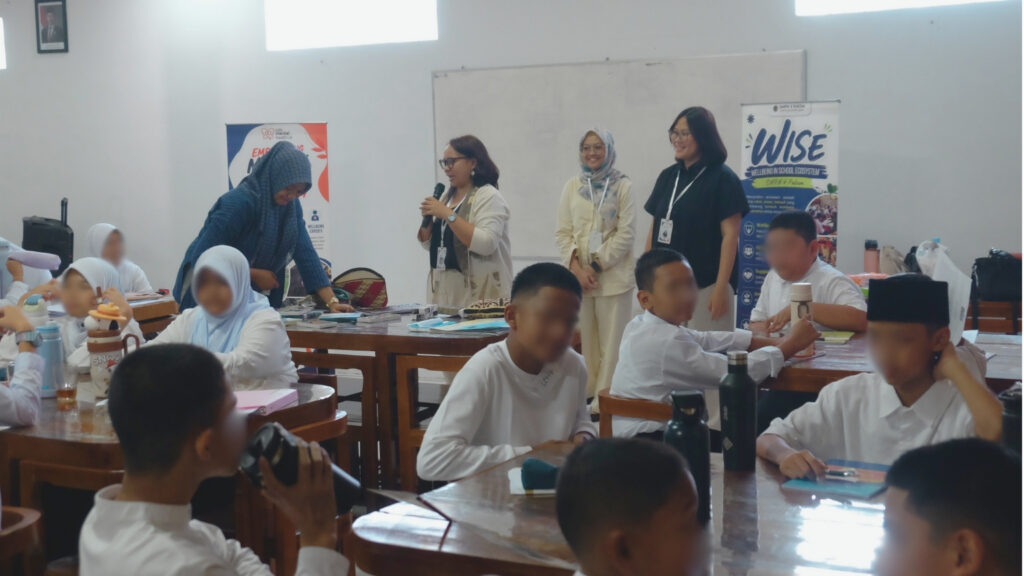
Creating mentally healthy schools requires collaboration, not individual effort. Through WiSe, we hope to inspire more schools to adopt a Wellbeing in School Ecosystem approach that places wellbeing at the heart of learning.
If you are an educator, school leader, parent, organisation, or potential partner, we’d love to connect. Together, we can expand the Wellbeing in School Ecosystem approach to more schools across Indonesia.
Interested in collaborating or learning more about WiSe?
Visit our website or reach out to us at info@talkmentalhealthid.org to explore partnership opportunities and discover how we can build healthier school ecosystems together.