Psychosocial support matters deeply for junior high school students, especially during adolescence—a stage marked by emotional, social, and developmental change. There are children who look completely fine at school. They arrive on time, complete their homework, sit through class, and still manage to smile when someone asks how they are doing.
From the outside, they may seem resilient, disciplined, or simply “used to it.” But underneath that surface, many are carrying pressures that adults do not always see.
For junior high school students, especially those in academically demanding environments, stress often begins quietly. It does not come only from assignments, exams, or grades, but from expectations that build from different directions at once—school, family, peers, and eventually, from within themselves.
Adolescence is not just a phase of learning. It is a critical period for emotional and mental development. During this stage, patterns of coping, self-understanding, and help-seeking begin to form—shaping long-term wellbeing, as highlighted by both WHO and UNICEF. The presence—or absence—of psychosocial support during this period can influence how young people relate to themselves for years to come.
The Invisible Weight of Academic Pressure
This reality becomes even more visible in high-performing schools, where expectations can feel especially heavy.
In these environments, children are often surrounded by achievement, comparison, discipline, and an unspoken understanding that they are expected to succeed. Parents want the best for them. Schools aim for strong outcomes. Over time, students begin to internalize these expectations.
Many start to believe:
- their worth is tied to performance
- falling behind means disappointing others
- rest is something to be earned, not needed
Research shows that academic pressure in adolescents is associated with higher risks of anxiety, depression, self-harm, and suicidal thoughts.
This reminds us of something important: academic stress is not a small issue. It is a real psychosocial concern—especially in a developmental stage where emotional systems are still forming.
When Children Are Asked to Cope Without Being Taught How
What makes this situation more concerning is not only the pressure itself—but the timing.
Many children are expected to manage stress before they are ever taught how to understand their emotions.
They are told to:
- stay focused
- be strong
- keep going
- not give up
But not every child has learned:
- how stress feels in the body
- how to distinguish disappointment from shame
- how anxiety can show up as irritability, silence, or withdrawal
Without this understanding, children are left carrying expectations without the tools to process them.
At this stage of development, young people are still learning how to recognize and respond to what is happening inside them. UNICEF highlights that adolescents are navigating unfamiliar emotional experiences while forming identity, relationships, and a sense of belonging. When emotional skills are not supported, everyday stressors can feel overwhelming and difficult to manage.
This is not a small issue. The World Health Organization (WHO) reports that one in seven adolescents aged 10–19 lives with a mental disorder, and many of these conditions begin before the age of 14. Yet, they are often undetected and untreated—especially when emotional struggles are misunderstood as behavior, attitude, or lack of discipline.
This is where psychosocial support becomes essential—not as a response to crisis, but as a foundation for prevention and emotional strengthening.
WHO emphasizes that adolescent mental health is shaped not only by individual factors, but also by environments—home, school, and community. Supportive, safe, and connected environments are protective, while pressure, stigma, and lack of understanding increase risk.
In other words, children should not be expected to “cope better” on their own—they need to be supported, taught, and accompanied in understanding what they feel and how to respond to it.
Understanding Early Adolescence (Ages 13–15)
From a developmental perspective, ages 13 to 15 sit within early adolescence—a period marked by rapid internal and social change.
At this stage, young people are:
- experiencing more intense emotions
- becoming more sensitive to social judgment
- building identity and autonomy
- seeking belonging while still needing guidance
According to UNICEF, adolescence is a time of significant opportunity—but also vulnerability. Young people are forming lifelong patterns in how they manage emotions, relationships, and stress.
This means that what students experience emotionally during this period is not “too much”—it is developmentally expected.
But without support, it can feel overwhelming and isolating.
Why Mental Health Literacy and Emotional Regulation Matter
This is why mental health literacy and emotional regulation should begin in junior high school—not later.
Mental health literacy helps students:
- understand that emotions are valid, not weaknesses
- name what they are feeling
- recognize when they need support
- reduce shame around asking for help
Emotional regulation helps students:
- respond to stress more safely and intentionally
- pause instead of react
- develop coping strategies such as breathing, journaling, or creative expression
- seek support before distress deepens
WHO and UNICEF both emphasize that adolescent wellbeing includes the ability to manage emotions, cope with challenges, build relationships, and access support when needed. These are not “soft skills”—they are foundational life skills.
These skills do not remove pressure.
But they change how young people carry it.
Instead of:
“I have to survive this alone,”
it becomes:
“I understand what I’m feeling, and I know what to do next.”
That shift matters.
What We Learned from Working with Junior High Students
At Talk Mental Health Indonesia (TMH.id), this understanding shapes how we work with young people.
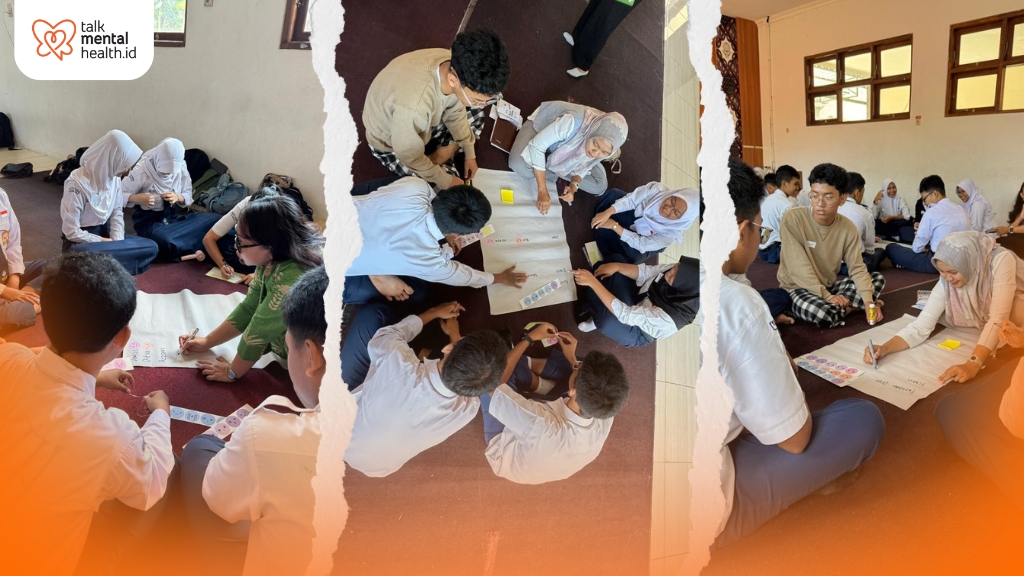
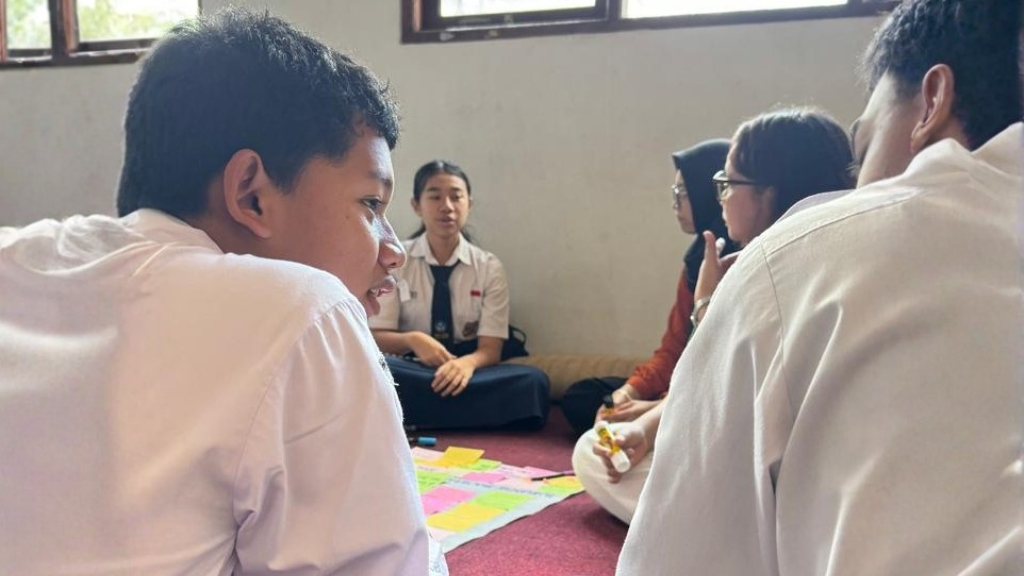
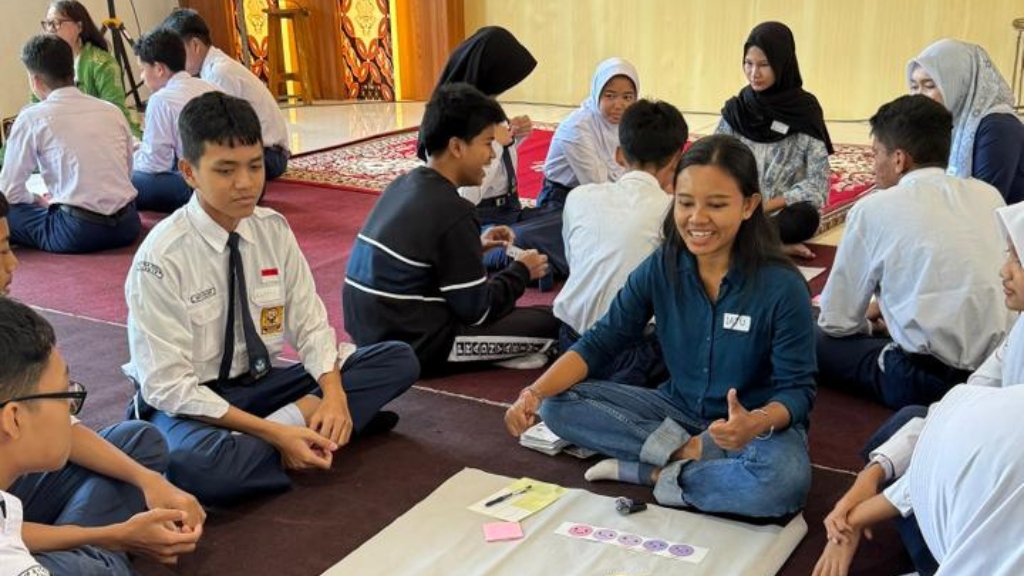
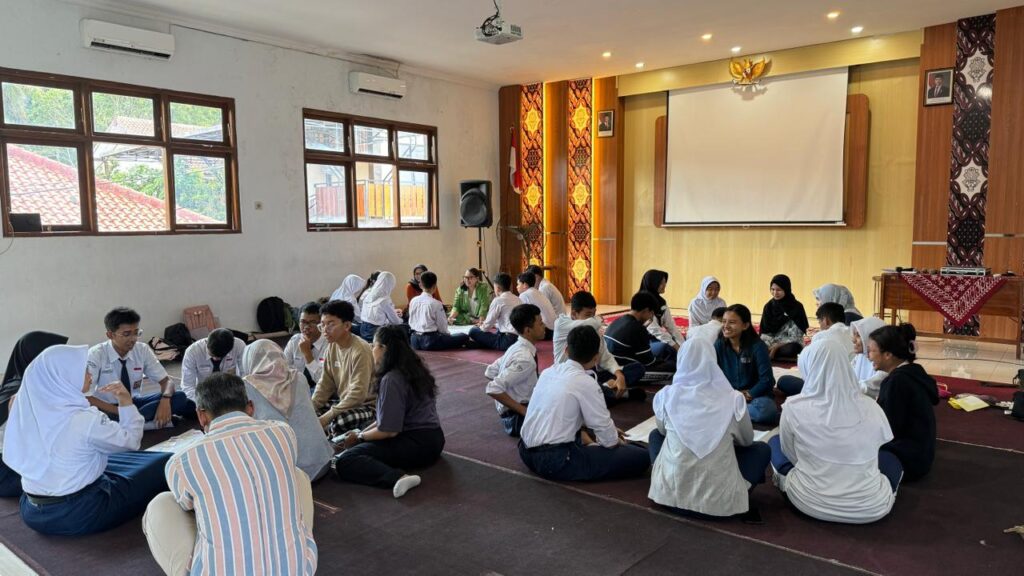
In March to April 2026, TMH.id conducted a series of psychosocial strengthening sessions with Grade 9 students at SMP N 4 Pakem, one of the well-regarded junior high schools in Yogyakarta, just before they entered the period leading up to the national final assessment (TKA).
Rather than waiting for visible distress, the sessions were designed as early support.
Students were invited to:
- map their stressors
- reflect on their current coping strategies
- identify their support systems
- practice simple journaling and emotional regulation
- express themselves through creative reflection
What we witnessed was not dramatic—but it was meaningful.
Students began to pause.
To name what they were feeling.
To realize they were not alone.
Emotional Preparation Matters as Much as Academic Preparation
One of the clearest lessons from this work is simple:
Children do not only need academic preparation.
They also need emotional preparation.
They need spaces where:
- pressure can be acknowledged, not minimized
- emotions can be understood, not suppressed
- support feels accessible, not distant
Psychosocial support at this stage is not an “extra.”
It is part of what allows young people to stay connected to themselves while navigating demanding transitions.
WHO and UNICEF both emphasize the importance of early, consistent, and context-sensitive support—not only after problems become severe, but as part of everyday environments where children grow.
A Quiet Reminder for Adults
A child who appears fine may still be struggling quietly.
A child who performs well may still feel exhausted inside.
And sometimes, one of the most meaningful things adults can offer is not more pressure—but:
- more understanding
- more language
- more space to breathe
Because in the end, education is not only about helping children reach targets.
It is also about helping them understand themselves, navigate pressure, and grow with resilience.
And for young people who may be carrying emotions they do not yet know how to say out loud, sometimes a small, gentle first step can matter. At Talk Mental Health Indonesia (TMH.id), one of the spaces we offer is Grief Box—a quiet invitation for young people to write down feelings of grief, heaviness, loss, confusion, or emotional overwhelm in an anonymous and safer way.
Grief Box can be found in several youth-friendly spaces in Yogyakarta:
📍 Palka Art n Craft
📍 GitGud Board Game & Cafe
📍 Warung Pelan-Pelan
📍 Kaimana Coffee
📍 Mojok Book Store
For those who may need a softer place to begin, TMH.id also offers a free downloadable zine that invites reflection, emotional expression, and gentle self-understanding.
You can learn more about Grief Box and where to find it, or download our free resources through TMH.id. Because sometimes support begins not with having all the answers, but with being given a small space to feel, reflect, and know that you do not have to carry everything alone.