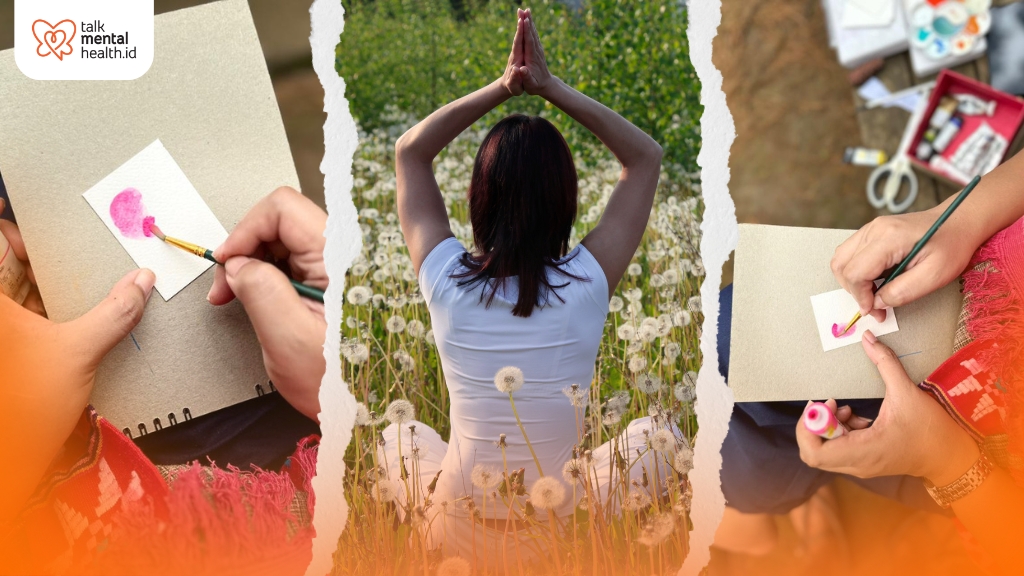
A few days in a sensory retreat can reveal something we often forget: we don’t only get tired from doing too much—we get tired from being disconnected from our own bodies. In a world that pushes speed and output, we live in our heads—planning, worrying, overthinking—while our senses quietly shut down just to survive.
A sensory retreat is created as a gentle response to this disconnection: an invitation to slow down, return to the body, and remember how it feels to truly be present. Through sensory-based and embodied practices, a retreat offers space to reconnect with feeling—not as something to control, but as something to listen to.
What Is a Sensory Retreat?
Sensory (or sensoric) art is a soft way to return. Unlike art that focuses on results or aesthetics, it invites you to feel before you think. Through touch, movement, texture, color, breath, and rhythm, the body is given permission to speak again—not to perform, but to express, release, and regulate.
Psychological research suggests that art-making is not only cognitive but deeply embodied. A study in Frontiers in Psychology (2025) describes how painting can engage perception, action, and sensation together—supporting a shift from constant thinking into present awareness.
Studies in arts and health also suggest sensory-rich creative practices may reduce stress, support emotion regulation, and help the nervous system feel more grounded and safe.
For those who have lived long periods in stress, emotional suppression, or people-pleasing, sensory practices can help the body move from survival into safety. When the body feels safer, clarity and presence often follow.
This is why returning to yourself is not only a mental process—it is a sensory one.
Before intention.
Before discipline.
Before devotion.
We return first to the body that carries it all.
Why Mental Health Begins in the Body, Not Only the Mind
Many of us try to heal by thinking harder—analyzing emotions, setting intentions, or forcing discipline. But when the nervous system is overwhelmed or stuck in survival mode, the body prioritizes protection over reflection.
That’s why purely cognitive approaches can feel exhausting when we’re already tired. Before clarity and intention, the body needs to feel safe.
A retreat environment can help because it reduces daily input (noise, demands, roles), giving the nervous system a clearer signal: you don’t have to brace yourself right now.
What Happens Inside a Sensory Retreat
1) Sensory Retreat + Gentle Movement and Yoga
Gentle movement and yoga offer a way back into the body without force. Through slow, mindful motion and awareness of breath, the body is invited to release stored tension—especially the kind that accumulates quietly in the shoulders, jaw, chest, and hips.
Rather than “doing” yoga for performance or flexibility, gentle movement supports nervous system regulation by reminding the body that it is safe to move, pause, and rest. When the breath softens and the body feels supported, mental noise naturally begins to settle.
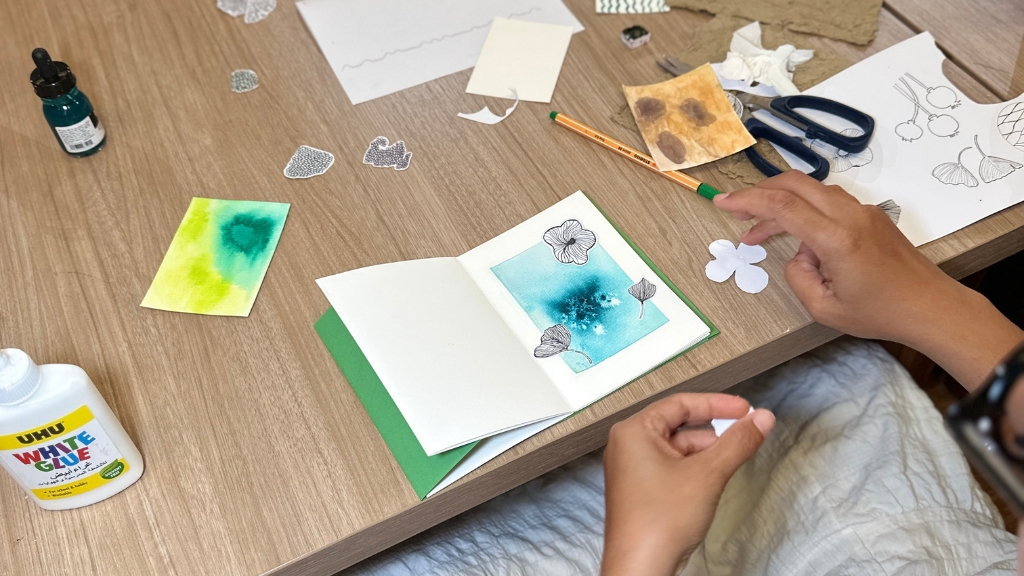
2) Sensory Retreat + Therapeutic & Slow Art
Not everything we carry can be spoken. Therapeutic and slow art offer a sensory pathway for emotions that are hard to name. Through texture, color, and gentle movement, the body can express what the mind may not yet understand.
Psychological research shows that art-making is a deeply embodied process, engaging perception, movement, and sensation together—helping the nervous system shift out of constant thinking and into present awareness, without the need to explain or rationalize.
3) Sensory Retreat + Journaling & Intention Setting
When the body has slowed down, reflection becomes gentler.
Journaling and intention setting are not used here as productivity tools, but as spaces for listening—connecting bodily sensations with thoughts and emotions. Writing after movement, art, or grounding allows insights to emerge organically, rather than being forced through mental effort.
In this state, intentions arise from clarity, not obligation.
4) Sensory Retreat + Somatic & Grounding Practices
Somatic and grounding practices help anchor attention in what is happening now—the sensation of the feet touching the ground, the rhythm of breath, the feeling of weight and support.
These practices are especially important for those who experience rumination, emotional overwhelm, or dissociation. By reconnecting with physical sensation, the nervous system receives cues of safety, reducing the urge to stay stuck in the past or worry about the future.
5) Sensory Retreat + Shared Meals as Rituals of Care
Mental health is not only individual—it is also relational. Shared meals held as rituals of care create a sense of belonging and safety that many of us miss in daily life. Eating together slowly reminds the body that nourishment is not only about food, but about presence and connection.
These practices are not about fixing what is “wrong,” but about restoring connection—between mind and body, emotion and sensation, self and presence.
When the body feels supported, the mind can rest.
When the nervous system settles, intention becomes clearer.
And when we slow down enough to feel, healing begins naturally.
Why Retreats Work: The Power of a “Container”
In daily life, we don’t only carry tasks—we carry roles. We are constantly “on”: being responsible, being agreeable, being productive, being okay. Over time, the nervous system learns to stay alert even when nothing is happening.
A retreat creates a container—an intentional environment that holds you temporarily outside your usual roles. It gives your system permission to step out of constant adaptation and return to a simpler question: What is true inside me right now?
This matters because regulation doesn’t happen only through techniques. It also happens through context:
- fewer decisions to make,
- fewer notifications,
- fewer performances,
- more spaciousness,
- more gentle pacing.
In that container, your body receives a consistent message: you can soften here.
The Safety of Structure: Why Retreats Are Not “Just Rest”
A sensory retreat is restful, but it’s not aimless. The structure is part of the medicine.
When practices are sequenced intentionally—movement before reflection, art before words, grounding before sharing—the nervous system can travel in a safer order:
from activation → to settling → to clarity.
That’s why many people find it easier to access insight during a retreat—not because their life problems disappear, but because their system is no longer overloaded.
Community Without Pressure: Being Seen Without Explaining
Another quiet healing element of retreats is relational safety: being around others without being asked to over-share or “fix” each other.
In a sensory retreat, community is not built through advice. It’s built through presence:
sitting together, making art in silence, eating slowly, breathing in the same room, hearing “me too” without needing to tell the whole story.
For many people who have spent years in people-pleasing or emotional suppression, this is new: connection without performance.
Integration: The Retreat Doesn’t End When You Go Home
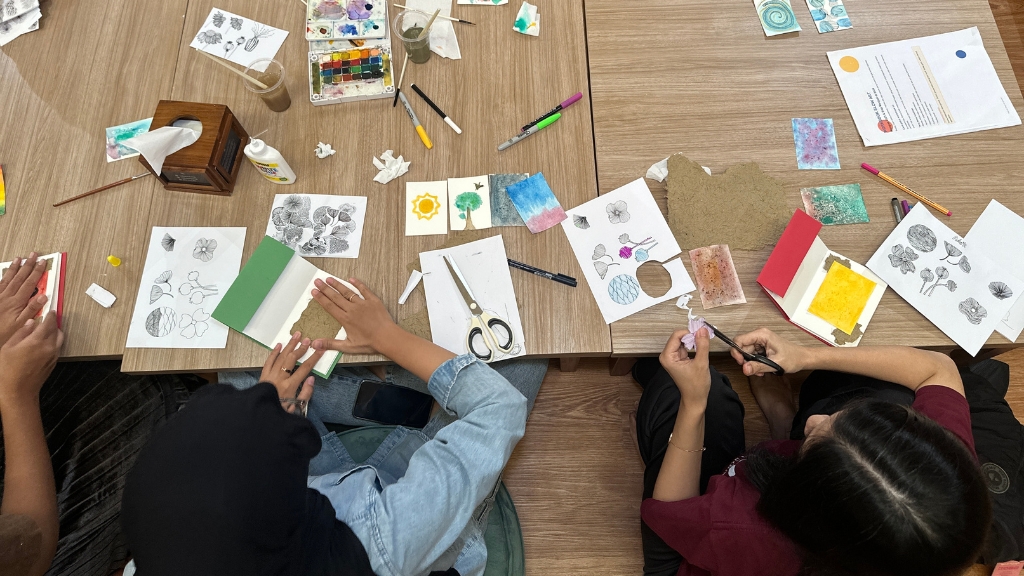
A good retreat doesn’t only help you feel better for two days. It helps you bring something back—a rhythm, a language, a practice you can return to.
Integration can look simple:
- a 3-minute grounding ritual before work,
- a weekly slow art moment,
- breath as a pause button,
- journaling prompts when you feel overwhelmed,
- learning to notice “I’m bracing again” and choosing softness.
The goal is not to stay calm forever. The goal is to have a pathway back.
Coming Back to Yourself, Gently
A sensory retreat is not about fixing what is “wrong.” It’s about restoring connection—between mind and body, emotion and sensation, self and presence.
When the body feels supported, the mind can rest.
When the nervous system settles, clarity becomes more available.
And when we slow down enough to feel, healing becomes less of a struggle—and more of a return.
If you want gentle resources to support your self-reflection journey, you can download our free zines and reflective tools here: https://talkmentalhealthid.org/freebies/
Talk Mental Health Indonesia is here to hold space—so you don’t have to carry it alone.