Understanding climate activist mental health is essential as more people engage deeply in climate justice work while holding heavy emotional, physical, and moral burdens. Activists often navigate eco-anxiety, burnout, guilt, and exhaustion—yet they also carry immense hope and commitment. This piece reflects on what it means to care for the people who care for the planet, and why mental well-being must be part of climate action itself.
A few months ago I received a consulting assignment from Yayasan Partisipasi Muda (YPM) to design a set of HappyMind activities—bringing mental health x climate change into one honest conversation. The scope was full-circle: conduct a baseline study, build a self-assessment, prepare guidelines & matrices for psychologists and observers, and draft a journal workbook that participants could actually use in real life. The final step was to meet the cohort—to share what eco-emotions are, highlight what our baseline found, and walk them through how the journal can support coping day to day.
At the start, I was genuinely excited. I’m familiar with eco-anxiety and eco-grief—in my experience, they’re a natural response when we love a living world we can see slipping. But the process reminded me: interest isn’t enough. I needed solid grounding—returning to literature, comparing perspectives, and listening deeply to how activists across contexts name their experiences. Learning, unlearning, and learning again—slowly, with an open heart.
From Numbers to Human Faces

Our baseline combined a self-assessment survey (six domains: daily eco-worry, its functional impacts, eco-grief, eco-guilt/moral emotions, burnout/exhaustion, coping & resilience) and short narrative reflections. This approach aligns with Jarrett et al. (2024), who emphasize that eco-anxiety research must assess not only worry but also functional impacts and a broader range of eco-emotions, including grief and guilt. By integrating these domains—and by using a mixed-method design with participants from Indonesia—our baseline also addresses two gaps identified in their review: the lack of qualitative insights and the underrepresentation of non-WEIRD contexts. Including coping and resilience further responds to their call for research on how individuals manage eco-anxiety and sustain long-term engagement. The data painted a clear pattern:
- Eco-anxiety was the most prominent signal (rumination, sleep disruption, a mind that struggles to “switch off”).
- Ecological grief flowed underneath (place-based loss, heaviness after field exposure).
- Eco-guilt sometimes motivated action but also reinforced harsh self-critique.
- Burnout came in waves across campaign cycles.
- Resilience persisted—rooted in peer care, humor, and nature contact.
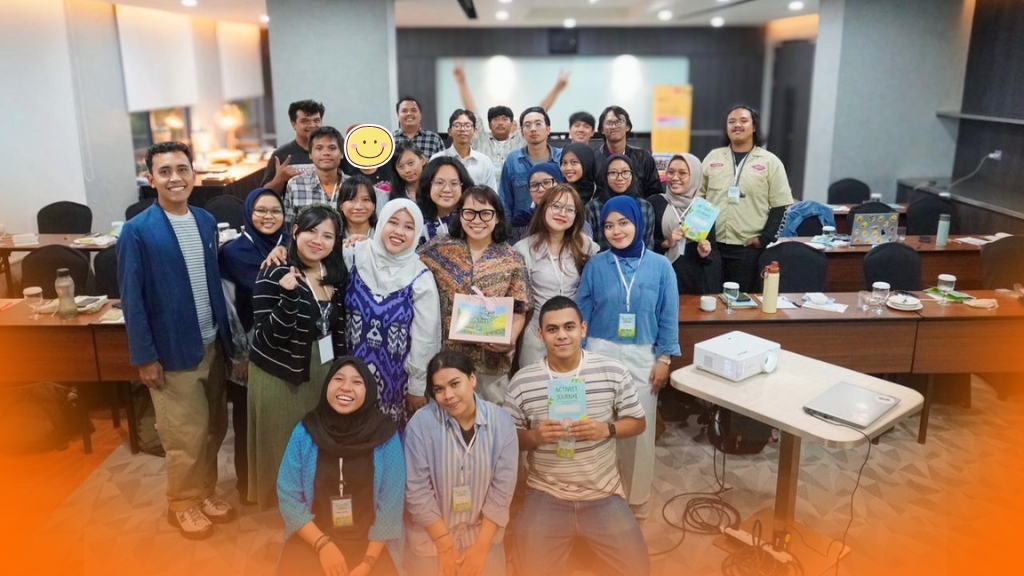
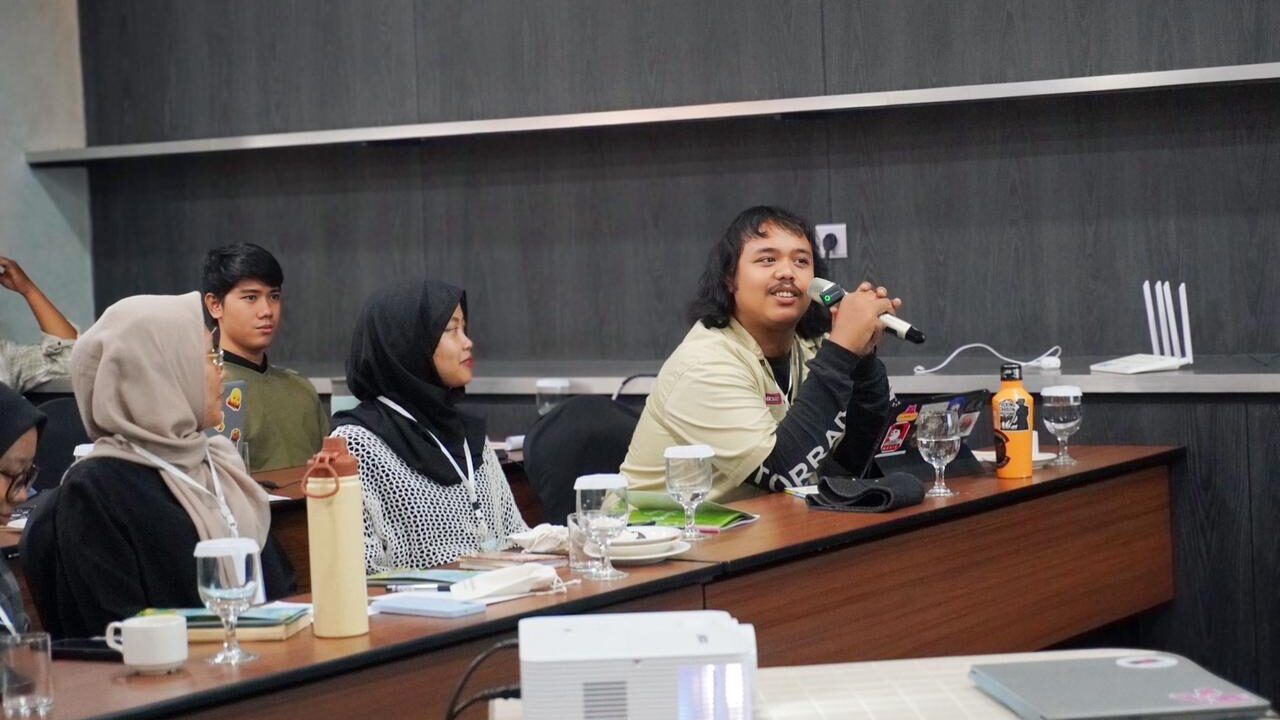
Then came the day I didn’t quite expect. In that room, 25 young people looked back—faces carrying courage, anger, sadness, and fatigue. Many had been in the movement for years. As we named each eco-emotion and mapped its impact on sleep, attention, relationships, and the body, something began to loosen. I heard quiet breaths, saw small nods, and watched words finally form: “Oh—that’s what this is.”
Spaces for Climate Activist Mental Health: Feeling Before Fixing
We set clear boundaries for the space. This wasn’t a strategy meeting. There are many rooms for policy, plans, and action items. This one was for feeling, naming, and processing. There’s an irony in climate activism: we fight for a sustainable world while often working in unsustainable ways for our bodies and minds. For a short time, we tried to refuse that irony.
“Care for the earth also means caring for the self that cares.”
Hearing What’s Usually Unheard in Climate Activist Mental Health
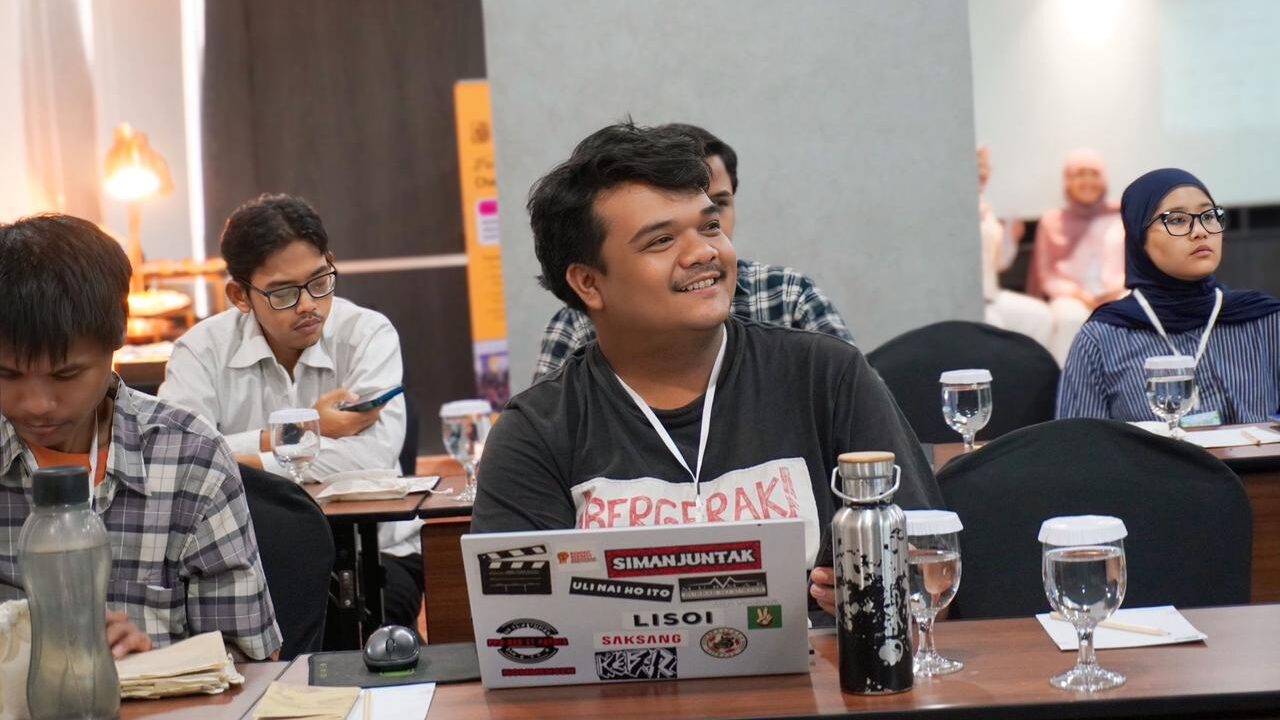
What touched me most were the stories behind the numbers. This wasn’t only physical tiredness. It was soul-tiredness from pushing against stubborn systems—sometimes corrupt, often indifferent, not rarely arrogant. It was grief for rivers of childhood that no longer hold the same life, for shrinking green commons, for species that don’t visit anymore. It was anger that speaks of love for what’s been violated. It was guilt shaped by perfection—like feeling you’re a fraud for a single “imperfect” choice. And of course, anxiety that makes rest feel like a luxury.
Amid all that, I saw power—quiet and faithful. Friends checking in. A 10–15 minute debrief after actions. Looking at the sky on purpose. Writing two or three lines in a journal. A five-minute walk. Giving the body permission to slow down without guilt. Small things, yes—but precisely because they are small, they can be consistent, and because they are consistent, they hold.
A Journal for Climate Activist Mental Health: A Small Companion for Big Days
My favorite part was introducing the journal we created—not as homework, but as a low-friction tool. Most pages take 10–15 minutes. There’s a mood & body-signal tracker, pause cards for overthinking, gentle breathing and grounding prompts, a page for ecological grief (with a prompt to design a small ritual), a reframe for eco-guilt, a 10-minute plan for overwhelm, a hope log, and a simple check-out.
This journal isn’t a grand solution to a grand problem. It’s a handle—something to help you arrive, name, and choose one realistic next step today. In long movements, small, repeatable steps often carry us further than dramatic leaps that burn us out.
What This Experience Taught Me About Climate Activist Mental Health

- Naming calms the nervous system. When eco-anxiety or eco-grief is named, the body often softens; we understand why we feel as we do.
- Care is a strategy, not a reward. Sleep hygiene, limiting doomscrolling, and time in nature are not luxuries; they’re infrastructure for endurance.
- Collective care is protective. Small appreciation, brief debriefs, clear roles, and safe norms make the same workload feel lighter.
- Learning has layers. Interest needs literature and reflection, so empathy can be both warm and accurate.
- Spaces for feeling are rare—and essential. We need more rooms like this in Indonesia’s climate movement ecosystem.
“The goal is not to feel less. The goal is to feel with support.”
Thank You—and What’s Next
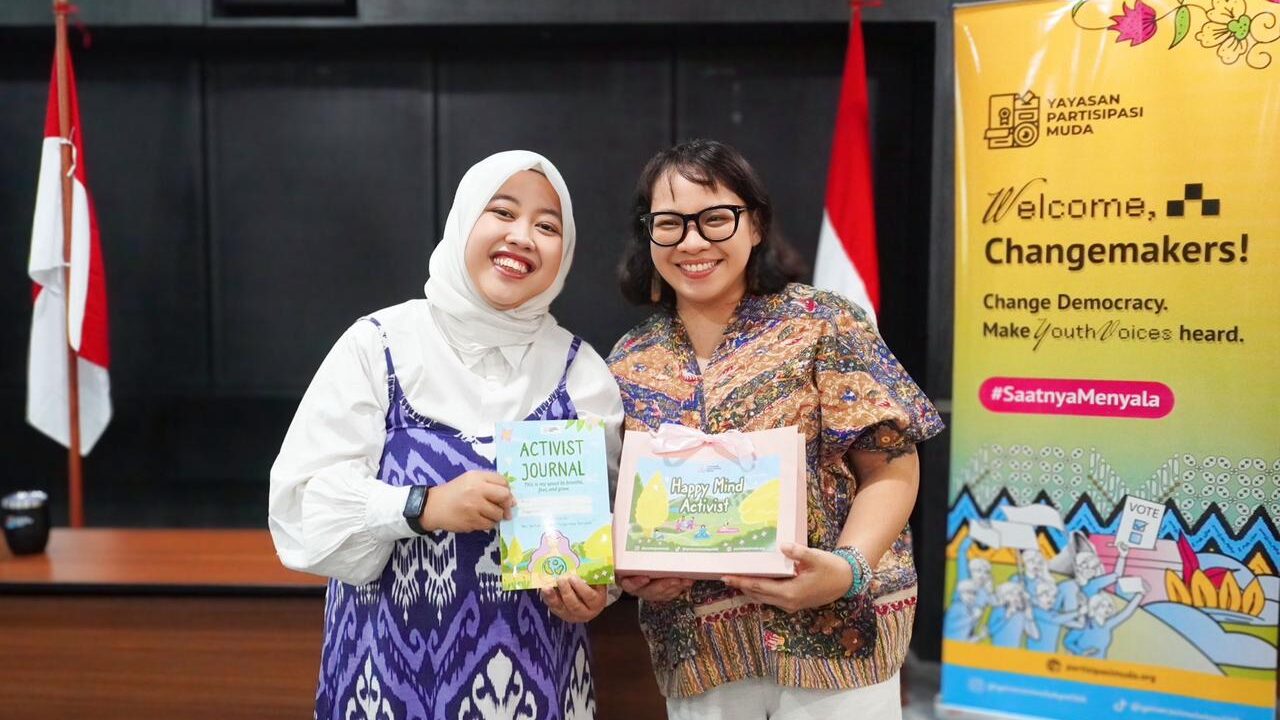
Gratitude to YPM for imagining and holding this space—caring for the people who care for the planet. For me and the team at Talk Mental Health Indonesia (TMH.id), this is a clear invitation to keep exploring climate activist mental health, mental health x climate change, and all the intersections in between. We’ll continue learning, practicing, and creating safe spaces, so activists can stay in the work longer—and in kinder ways.
I left that session tired, honestly—but warmed. Something felt more whole: that loving the earth also means learning to love the self who loves the earth, in all our imperfection and on not-so-easy days. Perhaps that’s how resilience grows—slowly, truly, together.
“What we love, we protect. And what we protect, we must sustain—within and around us.”
If this resonates with you, feel free to follow @fsischa and @partisipasimuda for more stories, reflections, and behind-the-scenes notes from this journey.
And if you’d like practical tools to support your wellbeing, you can download our free zine at:
https://talkmentalhealthid.org/freebies/