

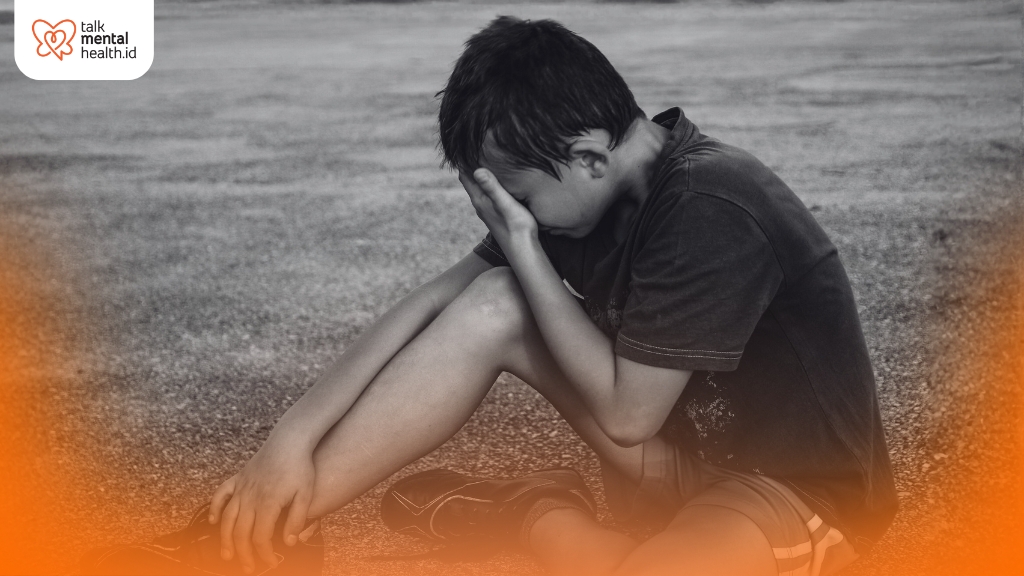
This is a story about Child Mental Health and how social pressure, shame, and structural neglect can become unbearable, even for a ten-year-old child.
This is not a story about pencils, notebooks, or school fees. It is about what happens when a child carries distress alone, without dignity, protection, or a safe place to be heard.
In late January 2026, a fourth-grade elementary school student (10 years old) in Ngada Regency, East Nusa Tenggara (NTT) was found dead. According to reports, the child had been under intense distress after being unable to buy basic school supplies—pens and notebooks.
At first glance, the story may sound like a tragedy caused by poverty. But as many experts and observers have pointed out, what happened goes far deeper than a lack of money. This case exposes a layered failure—of systems, of protection, and of how adults collectively respond to children in distress.
Child Mental Health Is Rising: What the Data Shows
This tragedy is not happening in a vacuum. Two recent infographics highlight a worrying pattern:
Suicide Attempts Among Students Increased (2015–2023)
In a survey measuring the percentage of students who attempted suicide at least once in the past 12 months, the numbers increased sharply from 2015 to 2023:
- Total: 3.9% (2015) → 12.9% (2023)
- Boys: 4.3% (2015) → 8.4% (2023)
- Girls: 3.4% (2015) → 12.9% (2023)
The increase is especially steep among girls, suggesting that emotional distress among students is rising—and not evenly distributed.
Reported Child Cases and Under-17 Suicide Data (2025)
Another infographic shows reported child suicide cases:
- 2023: 46 cases
- 2024: 43 cases
- Jan–Oct 2025: 25 cases
It also references national police data (Bareskrim Polri) showing 1,343 suicide cases recorded between January 1 and November 7, 2025, with 7.66% of cases involving individuals under 17.
The infographic further lists multiple child cases in 2025, including situations allegedly linked to bullying, family disruption, and deaths occurring at home or school—reminding us that risk factors can be present across settings where children should feel safest.
These numbers do not replace the human story—but they warn us: this is not “one rare incident.” It is part of a broader crisis tied to Child Mental Health, dignity, and protection systems.
Child Mental Health Without Words: When Silence Becomes a Signal
Children rarely say, clearly and directly:
- “I am ashamed.”
- “I am afraid.”
- “I feel like a burden.”
Instead, their experiences surface through:
- silence
- withdrawal
- changes in behavior
- physical complaints
- emotional shutdown
When a child carries a burden that is too heavy for their developmental stage, and there is no safe place to release it, the child may come to believe there is no escape.
This is not because the child is weak.
It is because they are alone with emotions that exceed their capacity to regulate and process.
Child Mental Health and “Symbolic Violence” in Schools
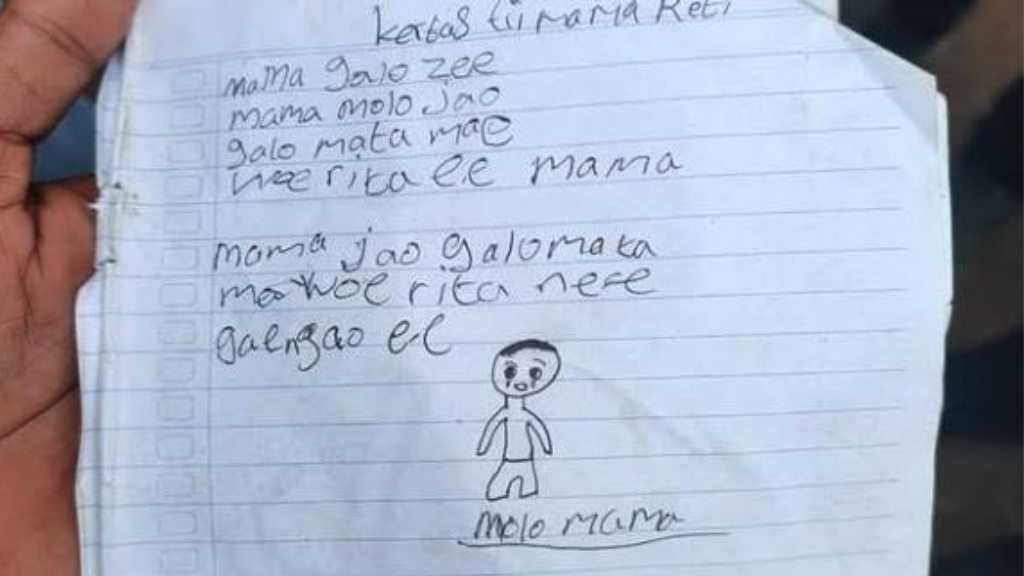
Sociologist Wida Ayu Puspitosari explains that, in underdeveloped or marginalized regions, school supplies function as more than learning tools. They act as a “passport” to social acceptance.
Without a pen or notebook, a child is not just unprepared—they risk being:
- singled out
- shamed
- perceived as “less than”
- excluded from peer belonging
This is what sociology describes as symbolic violence:
a form of harm that does not rely on physical force, but on social norms and expectations that punish those who cannot meet them.
In this case, the child was not simply struggling economically.
They were socially punished for failing to meet the minimum standard of what a “proper student” should look like.
Child Mental Health, Shame Culture, and the Burden Children Absorb
NTT is known for its strong communal culture. While community bonds can be a source of strength, they can also create intense pressure—especially in contexts of scarcity.
According to Wida, shame culture plays a significant role. Economic hardship is often experienced not just as difficulty, but as family disgrace. Children, who are highly sensitive to emotional atmospheres, absorb:
- their parents’ stress
- unspoken guilt
- fear of social judgment
A child may never be told explicitly that they are a burden—but they feel it.
When shame becomes internalized at a young age, it can quietly erode a child’s sense of worth and safety.
Child Mental Health and Structural Neglect: Poverty Is Not the Whole Story
This tragedy cannot be separated from broader structural realities.
NTT is often labeled as “underdeveloped,” but Wida challenges this narrative. The region is rich in natural resources—tourism, fisheries, mining—yet the benefits flow outward, not back to local communities.
This is not accidental.
It is the result of long-standing, Java-centric development models that extract resources while neglecting human investment in Eastern Indonesia.
So when we talk about a child who could not afford a pen, we are actually talking about:
- decades of unequal development
- weak redistribution of public resources
- policy decisions that leave families without adequate protection
When Death Feels Like the Only Remaining Agency
One of the most disturbing insights raised in this case is this: In conditions of extreme deprivation, ending one’s life can appear as the only remaining form of control.
When a child cannot choose:
- what to eat
- how to study
- how to change their circumstances
then making a final decision over their own body may feel like the only autonomy left.
If death feels more logical than life, the failure does not belong to the child.
It belongs to the entire social system surrounding them.
Why Child Mental Health Campaigns Alone Are Not Enough
Calls for “mental health awareness” often follow tragedies like this. While emotional support matters, Wida emphasizes that mental health cannot be separated from material conditions.
Promoting resilience without addressing:
- hunger
- poverty
- social exclusion
- humiliation
is like treating a fever without treating the infection.
Charity responses—fundraising after a child dies—may ease guilt, but they do not prevent the next tragedy.
What is needed is justice, not just compassion.
Education Must Be Truly Free and Truly Dignified
If education is a constitutional right, then no child should be excluded, sent home, or shamed for lacking basic supplies.
This means:
- schools must provide essential learning materials
- hidden fees must be eliminated
- access must be fast, simple, and non-stigmatizing
Support should never come at the cost of a child’s dignity.
The Role of Adults: Early Response Saves Lives
Children often “signal” distress long before a crisis:
- becoming quiet
- avoiding school
- withdrawing socially
- showing sudden behavioral changes
What they need is not punishment or lectures, but attuned adult response.
Support systems must move quickly and clearly:
home → school → health services → community
Waiting until a story goes viral is already too late.
What We Can Do Today
While systemic reform takes time, we can each become a protective layer in a child’s life:
- Listen without judgment
- Validate their experience: “It makes sense that this feels heavy.”
- Offer realistic reassurance: “You don’t have to handle this alone.”
Sometimes, one safe adult is enough to interrupt despair.
Strengthening Child Mental Health Together

This is not just a tragic story from NTT.
It is a mirror held up to all of us.
A reminder that:
- children often carry what adults fail to hold,
- silence can speak louder than words,
- and dignity is as essential to survival as food and shelter.
When a child reaches a point where life feels heavier than living,
what has failed is not the child but the systems, protections, and adult responses meant to keep them safe.
For those of us reading this, we are invited to make a choice.
To become adults who are emotionally available.
Adults who respond before it is too late.
Adults who make children feel:
“I am seen.”
“I am protected.”
“I am not alone.”
If you believe children deserve to learn, grow, and struggle without shame,
join us in building safer spaces for children’s mental health.
Download our free zines: created to help adults, parents, educators, and communities understand emotional distress, dignity, and care in everyday language.
Let us move beyond silence and sympathy.
Let us choose presence, dignity, and protection
so no child has to carry an unbearable burden alone.
Source:
Kompas.id – “Anak SD di NTT Bunuh Diri, Ada Fenomena Lebih Gelap dari Sekadar Tidak Punya Uang” (February 2026)